
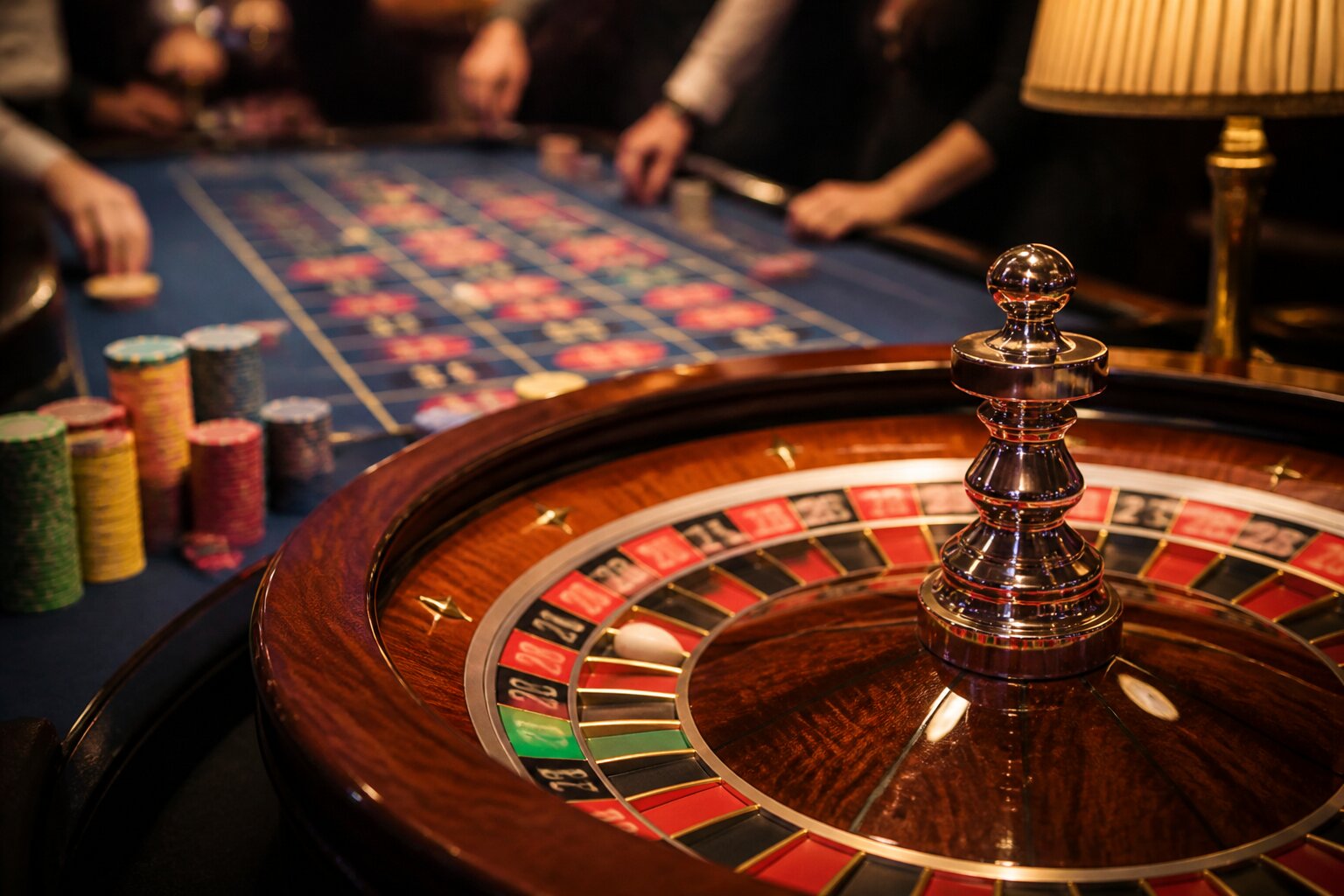
Roulette's spinning wheel and the rise and fall of bets make it one of the most recognisable casino games in the UK, on the high street and online. Behind that familiar setup, the game's mathematics determine how money flows between players and the casino. That single green zero is a small detail with a big impact, shaping how expected returns work over many bets.
Understanding those mechanics helps make the game more interesting and gives a clearer view of why casinos remain commercially viable. Read on to see how the house edge is calculated, how it turns wagers into steady revenue, and what common misunderstandings cloud players’ expectations.
Understanding the House Edge in Roulette
The house edge is the casino’s built-in advantage on every bet, designed so the game can operate sustainably. In European roulette, the standard in the UK, the house edge is 2.7 percent, which stems from the presence of a single green zero on the wheel.
For a straight-up bet on a single number, there are 37 pockets: numbers 1 to 36 plus the zero. A winning straight-up pays 35 to 1, but the actual chance of that single number appearing is 1 in 37. Put another way, each £1 staked on such a bet returns, on average, about 97.3p over time, with the remaining 2.7p representing the house edge. Short-term sessions can show big wins or losses for individual players, but as the number of spins grows, the average outcome moves towards that expected return.
This margin exists to cover operating costs such as staff, facilities and licensing, and to ensure the game runs reliably for players. With that settled, the next section explains how the house edge translates into real revenue for a casino.
How Does Roulette Generate Casino Revenue?
Roulette generates revenue through the steady application of the house edge to the total amount wagered. Each bet carries a small expected retention for the house, and when many wagers accumulate, that retention adds up to meaningful income.
Consider a simple scenario: 1,000 players each place a £10 bet on even-money outcomes like red or black, producing £10,000 in total stakes. With a 2.7 percent house edge, the casino’s expected retention from those bets is roughly £270. Individual players will see a range of outcomes—some win, some lose—but the aggregate maths produces a predictable result over many bets and sessions.
Casinos also benefit from variations in player behaviour: longer sessions, larger average stakes and repeated wagers all increase the total amount exposed to the house edge. That steady flow of wagers allows operators to fund games, technology and customer support while maintaining regulatory compliance and fairness. Next, we’ll compare how different roulette variants affect those returns.
Comparing House Edge: European vs American Roulette
European and American roulette share many surface similarities, but a small change in wheel design significantly alters the house edge and therefore expected player returns.
European roulette has 37 pockets, including a single zero, producing a 2.7 percent house edge. American roulette includes an extra green pocket for double zero, increasing the total to 38 pockets and raising the house edge to 5.26 percent. Although payout structures are typically the same across the two versions, the additional zero in the American game shifts the mathematics further in the house’s favour.
Key Differences in Wheel Layout and Rules
The primary distinction is straightforward: European wheels use one zero, American wheels use zero and double zero. That extra pocket reduces the probability of winning a straight-up bet without changing the payout, which is why the house edge increases.
Impact on Player Payouts
Both versions generally pay 35 to 1 for a straight-up bet. In European roulette, the probability is 1 in 37, so the expected return per £1 bet is around 97.3p. In American roulette, the probability drops to 1 in 38, lowering the expected return to about 94.74p per £1. Over many bets, players receive less back on average in the American version, which is why choosing the lower-edge variant matters when playing for longer sessions or larger volumes.
With the differences clear, the following section explains why the house’s small advantage becomes decisive over time.
Why the House Always Profits Over Time
The house edge turns a vast number of individual wagers into a reliable income stream because of how probability works across many trials. While any single spin is unpredictable, aggregating thousands or millions of spins reveals the expected retention for the house.
For instance, if many players collectively wager £1,000,000 on European roulette, the casino’s expected take at 2.7 percent would be about £27,000. Individual sessions will vary—some players win, others lose—but the combined pattern of bets produces that predictable outcome. Casinos do not need every player to lose every time; they rely on volume and the persistent margin to sustain operations and invest in services players use.
Understanding this helps set realistic expectations: gambling remains a form of entertainment with measurable costs over time. The next section tackles common myths that can lead to mistaken beliefs about beating the house.
Common Misconceptions About Roulette House Edge
There are several persistent myths about roulette that can misdirect player expectations. Clearing them up makes it easier to enjoy the game sensibly.
Myth: Betting systems can beat the house edge
Systems such as doubling bets after losses do not remove the house edge. They may produce short-term wins, but table limits and run-length variance mean those systems cannot change the long-term expected return.
Myth: Streaks make a result “due”
Each spin is statistically independent, so previous outcomes do not alter the probabilities of future spins. Perceived streaks are a natural feature of random outcomes, not an indication of a correction.
Myth: You can spot a “hot” or “cold” wheel
Regulated venues and software are audited to ensure randomness. Apparent patterns are usually coincidental and not exploitable in any reliable way.
Myth: The house edge makes the game unfair
The edge is a known feature of the game’s rules and payouts. Regulation and oversight require that games operate transparently and meet fairness standards.
If gambling ever feels less enjoyable or harder to control, confidential support is available from recognised charities and helplines that offer practical help and guidance. Turning now to behaviour, the final section explores how individual choices affect both player outcomes and casino revenue.
The Role of Player Behaviour in Casino Profits
Player choices—session length, bet sizes and responses to wins or losses—shape how much of a player’s money is exposed to the house edge and therefore affect both individual results and a casino’s overall revenue.
A player who places a few low-stake even-money bets will encounter less exposure than someone who plays many hours, favours straight-up bets or increases stakes after losses. Chasing losses by raising stakes typically increases the total amount at risk and magnifies expected losses, because the house edge applies to the larger sum. Conversely, setting clear budgets and time limits reduces exposure and keeps play aligned with personal priorities.
Roulette is designed for enjoyment rather than income. Keeping wagers proportionate to a budget, taking breaks and being aware of how session length and bet size influence expected returns helps maintain a balanced experience. With that in mind, walk away from the table satisfied that you understood how the maths works and what it means for your play.
Play Casino Games Online at Easy Slots
Fancy adding a bit of entertainment to your downtime? We’d be delighted to welcome you to our site to explore all the fun we have to offer.
Getting started is straightforward: just create an account, make a deposit and you’re ready to play. We look forward to seeing you at Easy Slots.
**The information provided in this blog is intended for educational purposes and should not be construed as betting advice or a guarantee of success. Always gamble responsibly.