
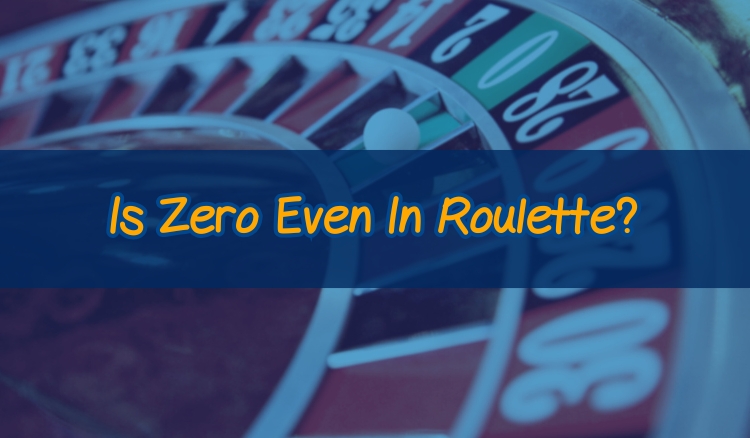
Roulette, a classic casino game, has intrigued and entertained people for centuries. As the little ball bounces around the wheel, players eagerly wait with anticipation to see where it will land to find out if their bets have won. But there's one pocket that often piques curiosity - the zero.
Zero might seem like just another number on the wheel, yet it plays a crucial role in how the game works and the odds it offers. Whether you're a seasoned roulette player or new to the game, the concept of the zero in roulette can catch you by surprise.
Have you ever wondered how the zero affects the bets you place? Or why is it made to stand out so much on the wheel? More importantly, is zero considered even in roulette?
Let's explore just what makes zero so special and how understanding its place on the wheel can help increase your knowledge of the game and possibly help you enjoy your roulette experience.
Is Zero Classed As An Even Number In Roulette?
In roulette, numbers are split into several categories, such as red or black, odd or even, and high or low. These categories are offered as betting options to players, allowing them to place bets on these large groups of numbers in a single bet. However, zero holds a unique position in this setup.
Zero is neither red nor black (appearing green on the wheel), it is not considered high nor low, and it is not considered an even or odd number in roulette. While even numbers include 2, 4, 6, and others, zero stands apart on its own. This means if you place a bet on even numbers, zero will not count as a win for your bet if the ball lands on this pocket.
The inclusion of zero gives the house an edge. That's because zero doesn't fall into the typical categories, meaning these large group bets always have odds of winning that sit just under 50%. The zero counts as a loss on all bets unless it is explicitly bet on as part of an inside bet.
Why Is The Zero Used In Roulette?
The zero in roulette serves a significant purpose that impacts both the game's design and the casino's advantage. When players place their bets, they have numerous options, including choosing broader categories like odd/even or red/black. However, zero does not fit into any of these usual categories, giving the house a built-in advantage over players.
The origin of zero dates back to the creation of the roulette wheel. It was introduced to ensure the casino holds a slight advantage on the even-money bets. This unique number/pocket is why the odds are always slightly in favour of the house.
For example, say you place a bet on red. There are 18 red pockets on the wheel, with 37 pockets in total (on a European roulette wheel). However, although there are only 18 black pockets on the wheel, there are 19 pockets that can result in a loss (the ball landing on any of the 18 black pockets or the green zero pocket), meaning there is a 48.6% chance of your bet on reds winning. The odds remain the same even if you choose black or any of the other even-money outside bets because the zero always counts as a loss unless you place an inside bet on it. So, for these bets, there are 18 pockets that could result in a win but 19 that could result in a loss.
In European roulette, you'll find a single zero pocket, while American roulette features both a zero and a double zero pocket. The addition of these slots alters the odds slightly differently in each version, but the purpose remains the same. It's to keep the odds ever so slightly in the casino's favour to ensure them a profit in the long run while also adding a bit more excitement and challenge for players.
What Are The Chances Of Getting Zero In Roulette?
When playing roulette, understanding the chances of the ball landing on zero can help you grasp the game's odds better. The probability of hitting zero varies slightly between the two main versions of the game - European and American roulette.
In European roulette, the wheel has 37 pockets, numbered from 0 to 36. This version has a single zero pocket. Therefore, the chance of the ball landing on zero is 1 in 37 or roughly 2.7%.
Meanwhile, in American roulette, there's both a zero and a double zero, increasing the total pockets to 38. This means the chance of landing on a zero is 2 in 38 or about 5.26%. The addition of the double zero provides a greater advantage to the house because there are more pockets that result in a loss on even-money outside bets.
Knowing these probabilities can help you make more informed decisions on which variation may best suit your preferences, while placing bets, and understanding how zero influences the overall game dynamics.
*All values (Bet Levels, Maximum Wins, etc.) mentioned in relation to this game are subject to change at any time. Game features mentioned may not be available in some jurisdictions.
**The information provided in this blog is intended for educational purposes and should not be construed as betting advice or a guarantee of success. Always gamble responsibly.