
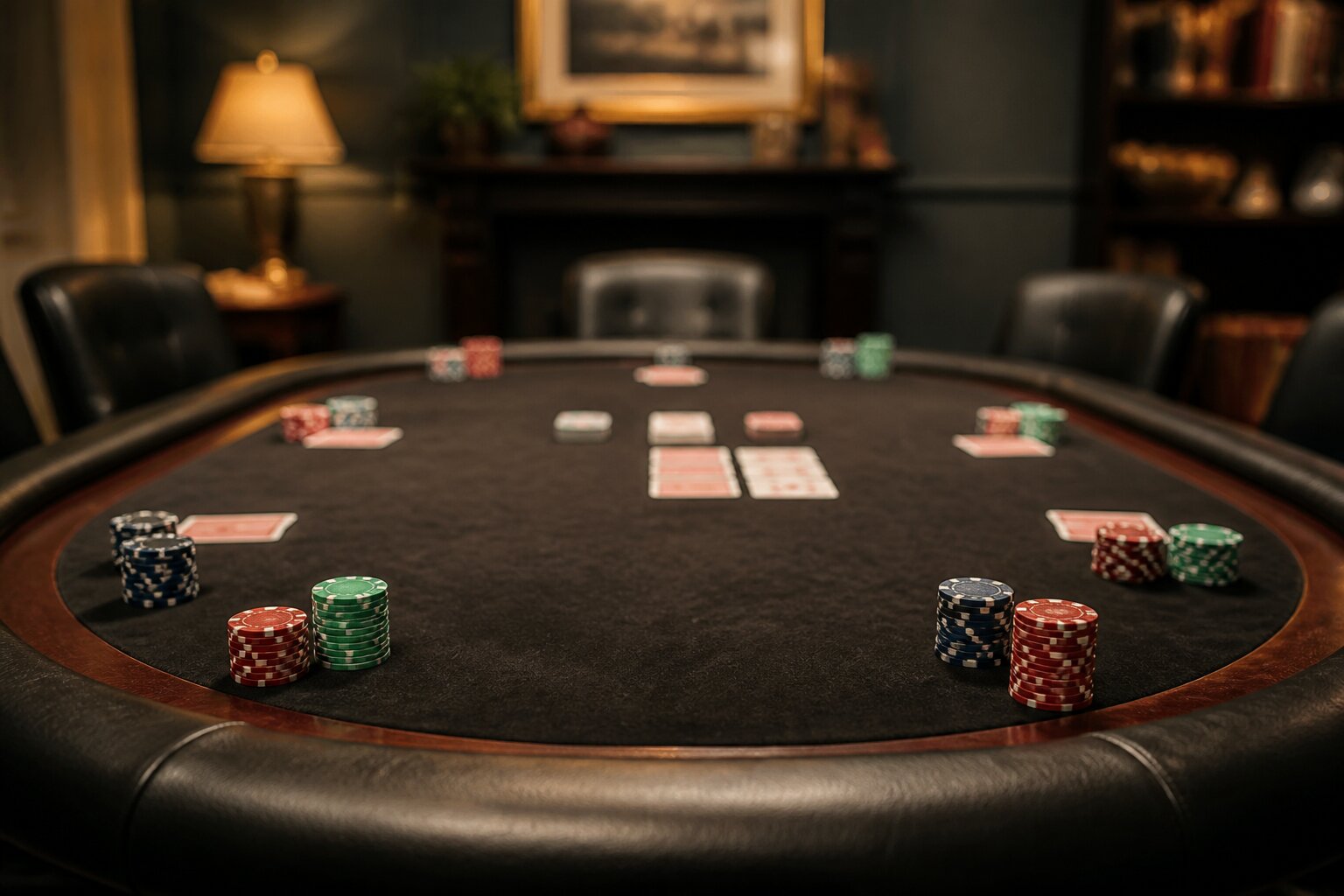
Ever thought about hosting a poker night but weren’t sure how many mates to invite? Or maybe you’ve glanced at a busy poker table and wondered what the ideal number of players really is.
Getting the numbers right matters: too few and the game can feel flat, too many and things slow to a crawl. Different poker variants and settings change the feel, so knowing the best table sizes helps you plan a game that keeps everyone engaged.
Read on to find the sweet spots for common poker formats and practical tips for running a smooth, enjoyable night.
What Is the Ideal Number of Players for Different Poker Variants?
Each poker variant has a practical range that keeps the action balanced. For Texas Hold’em, the most played version, six to nine players is typical: enough people to create varied hands and strategy, but not so many that waiting between turns becomes tiresome. Omaha behaves similarly, though tables sometimes stretch to ten when the group is large.
If you’re at home, flexibility helps. A smaller group of three or four speeds the game up and makes each decision more consequential, while a fuller table delivers a broader spread of playing styles and larger, more contested pots. The key is choosing a size that fits your space and the mood you want—purposeful play with steady engagement.
Before a game, agree the stakes and any house rules so everyone arrives with the same expectations. Make sure the environment is comfortable and that players are of legal age; those basics keep the night friendly and fair.
Recommended Table Sizes for Home Poker Games
For a relaxed home evening, five to eight players usually works best. That range gives a lively atmosphere without crowding at the table, and it lets each person manage chips and cards comfortably.
Smaller groups, down to three players, are perfectly fine if you want a brisker game where hands come around quickly and bluffing becomes a more prominent tool. If your guest list grows beyond nine, consider running two tables or rotating players to avoid long gaps between hands and keep everyone involved.
Practical details matter: provide enough seating, extra decks if needed, and a clear chip structure so buy-ins and payouts are understood. Lighting and a suitable table surface help cards and chips be handled smoothly, improving the overall experience.
How Does Table Size Affect Game Dynamics?
Table size changes the rhythm and strategy of play. At larger tables each round takes longer and you see a wider variety of hands and behaviours, which can encourage tighter, more selective play. At smaller tables you participate in more pots, the action is faster, and aggressive strategies tend to come to the fore.
Players should adapt by observing how the table is playing and adjusting their own style accordingly. In a small game, tight play can give way to more frequent raises; in a big game, patience and positional awareness become important. Whatever the setup, the objective is a fair, enjoyable contest that matches the group’s temperament.
Common Myths About Poker Table Sizes
There are misconceptions about table size that can shape expectations unnecessarily. Some people claim smaller tables always produce bigger pots or that certain sizes change your odds—those ideas oversimplify how poker works. The main influences on pot size and outcomes are the players’ choices and the agreed stakes, not the number of seats alone.
What truly matters is making sure everyone understands the rules and is comfortable with the stakes and pace. With that in place, gameplay will reflect skill and strategy rather than preconceptions about table size.
Choosing the Right Table for Your Poker Night
Choosing the right table is partly practical and partly about atmosphere. Think about how many will attend and pick a surface that gives each player enough room to manage chips and cards. A dining table often works well for up to eight people; for more, consider additional tables or staggered play so nobody waits too long between hands.
Comfort extends to chairs and lighting. Good, supportive seating keeps the evening pleasant, and clear overhead lighting reduces mistakes and keeps play fair. A felt mat or poker table topper improves card handling, but even a clear, level surface will do the job.
Explain the house rules and stake limits at the start so the session proceeds smoothly. When players know what to expect they can focus on the game itself, and the evening runs more enjoyably for everyone.
Can You Play Poker With Just Two Players?
Yes — heads-up poker, played between two people, is a well-established format. It keeps the same core rules but the dynamics shift: turns rotate quickly, and decisions are more direct because you’re facing only one opponent. This format is popular for both cash play and competitive scenarios when larger groups aren’t available.
Heads-up play rewards adaptability. With fewer opponents you see more hands and must read a single rival more closely, so positional play and timing become especially significant. It’s an engaging option when you want an intense, focused match without a full table.
Whichever format you choose, good preparation and clear communication at the start set the tone for a fair and pleasant game. Keep the focus on friendly competition and clear boundaries for stakes so everyone can enjoy the evening.
**The information provided in this blog is intended for educational purposes and should not be construed as betting advice or a guarantee of success. Always gamble responsibly.