
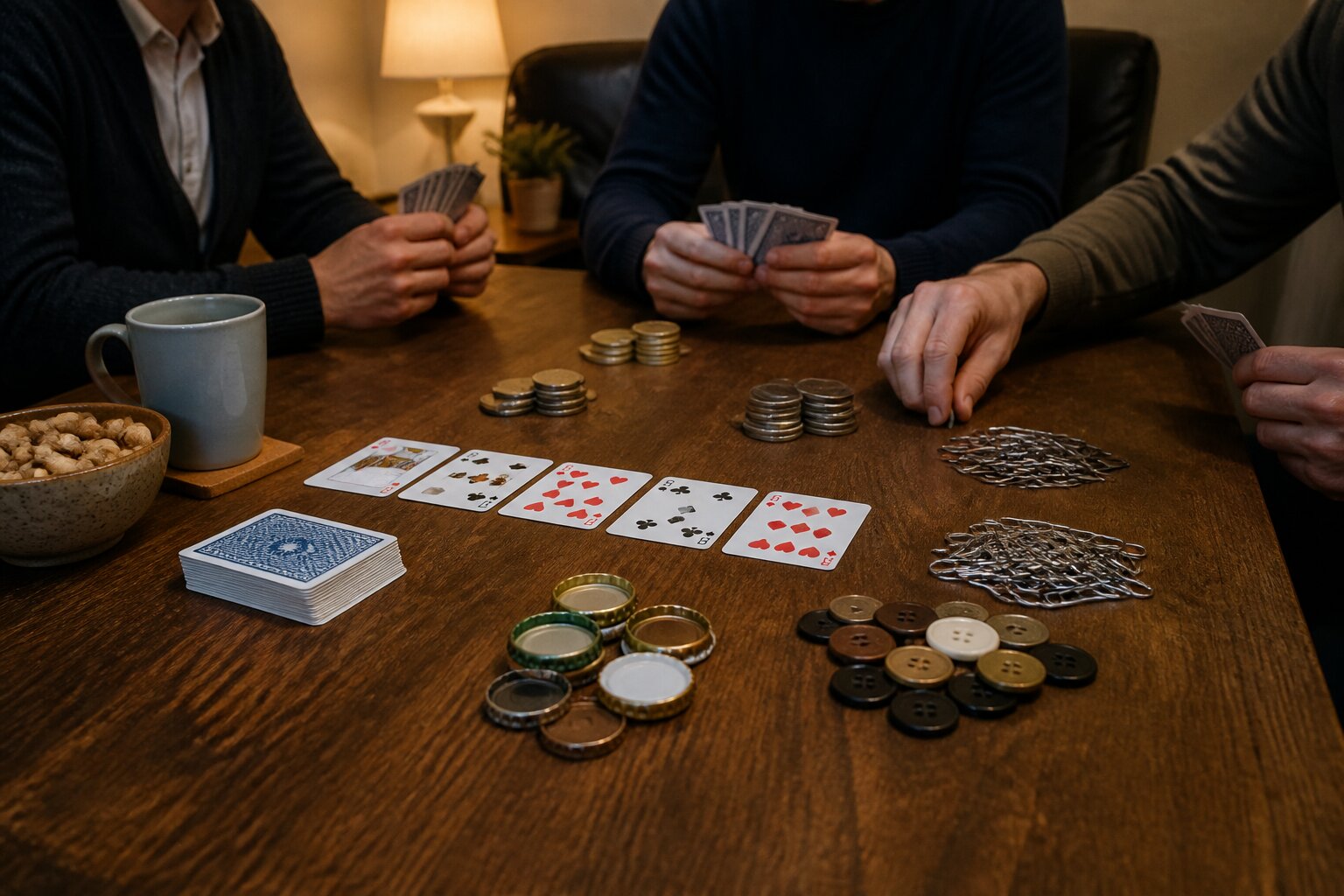
Fancy a poker night but haven’t got any chips to hand? Don’t let missing kit spoil the plans. Whether your set is packed away, you’re travelling light, or you just want a different spin on the evening, everyday items can stand in perfectly.
With a little imagination you can turn things from around the house into clear, easy-to-use tokens and keep the game moving. Below you’ll find practical ideas for substitutes, ways to keep bets organised, and simple tips to make a smooth night of it.
Read on and you’ll be ready to deal the first hand without any specialised equipment.
Why Might You Play Poker Without Chips?
There are plenty of reasons you might choose to play without a traditional chip set. The most common is convenience: impromptu gatherings, holiday accommodation, or hosting somewhere you did not want to bring a heavy case. At other times a broken set or misplaced pieces make substitutes a necessity.
Playing without chips can also shift the tone of the evening. Homemade or household tokens tend to make the game feel more informal and approachable, which is often helpful for newcomers. Whatever the reason, the core game remains the same, so the change is mostly cosmetic and social.
If you do decide to play for stakes, keep amounts modest and agreed by everyone. Poker is intended as social entertainment for adults only.
What Can You Use Instead of Poker Chips?
Almost anything that is easy to count and distinguish can work. Coins are the obvious go-to: assign a simple scale of values and stick to a few denominations to keep scoring straightforward. Other practical options include buttons, board game counters, bottle tops, paperclips, LEGO bricks, or small squares of coloured paper.
If you want a playful touch, sweets like jelly beans or chocolate buttons can be used, though it is sensible to keep wrapped items if people plan to nibble. The important point is uniformity within each value and a shared understanding at the outset so everyone knows what the items represent.
Everyday Household Items That Make Great Poker Chip Replacements
Look around the kitchen drawer and you will find plenty of useful pieces. Loose change, coloured buttons, dried pasta shapes and bottle caps are all easy to sort and stack. Board game tokens can be repurposed and small craft supplies, such as beads or felt pads, make tidy counters.
When choosing, favour items that are distinguishable at a glance and robust enough to be moved around without falling apart. If you plan to reuse the same substitutes for future nights, consider marking them with a permanent pen or adding coloured stickers to denote value.
This keeps play neat and reduces interruptions during a hand.
How to Keep Track of Bets Without Chips
Maintaining clarity about who has what is the essential task when no standard chips are used. A simple shared record on paper will do: note each player’s starting total and update it as rounds finish. You can keep this in a notebook, on a single sheet that stays on the table, or on a phone note that everyone can view.
Alternatively, nominate one person to oversee totals and resolve disputes. Having a single keeper helps avoid confusion when rounds become lively and provides a clear point of reference if anyone questions a result. Rotate the role if you want everyone to take a turn.
If you have a mix of items representing different values, place a small reference chart where everyone can see it. Make the chart easy to read and refer to it at the start so nobody doubts the agreed values. Clear bookkeeping prevents misunderstandings and keeps the focus on the cards and conversation rather than arithmetic.
A few extra practical tips:
- Use different containers or piles for different denominations so items do not get mixed up.
- Mark tallies on the score sheet for quick, round-by-round tracking rather than recalculating totals each time.
- Agree stakes and any limits or buy-in rules before you start to avoid disputes mid-game.
- Keep things visible and transparent so that everyone can check totals easily.
Remember to play responsibly and treat the game as entertainment. Set sensible limits, take breaks, and stop if it stops being fun.
Creative DIY Poker Chip Alternatives
If you enjoy a crafty element, making your own tokens is both practical and fun. Thick cardboard circles coloured or numbered with a marker produce surprisingly durable chips. You can reinforce them with a couple of layers of card or a ring of tape around the edge to help them last longer and sit nicely in stacks.
Stickers applied to coins, bottle lids or old token pieces can quickly create distinct denominations. Common approaches include:
- Using coloured stickers or washi tape to give each denomination its own colour.
- Numbering plain discs with a permanent marker for clear value identification.
- Gluing a thin washer or small weight to the underside to give lighter materials more heft and a satisfying feel.
Personalising tokens for a regular group adds a sense of identity to your nights and can make each session feel a little more special. Small design touches such as initials, club logos or themed stickers help players tell chips apart at a glance and reduce disputes.
Whatever method you choose, make sure the finished pieces are easy to handle and clearly marked so they do not slow play down. Keep chips a comfortable size for shuffling and stacking, avoid overly smooth finishes that slip, and store them in a box or tray between games to prevent damage. Also consider safety and legality: avoid using current legal tender if that could cause issues, and keep small pieces away from young children.
Playing Poker With Paper, Coins, or Tokens
Using paper, coins or simple tokens works well if everyone understands the system used. Clear communication at the start of the game prevents disputes later and helps the session run smoothly. Agree values, denominations and any house rules before play begins.
Consider these practical tips to keep improvised currency tidy and easy to use:
- For paper, use bold numbers and clear colours so values are easy to read at a glance. Laminating or using card stock can make notes more durable and stop them curling.
- With coins, stick to a maximum of two or three denominations to reduce the arithmetic needed between hands. Keep coins clean and, if possible, separate them in stacks or trays to avoid confusion.
- Tokens benefit from being the same size and weight where possible so stacks are stable. If you must use mixed tokens, mark their values clearly and use rubber bands or small trays to keep stacks neat.
These substitutes influence only the mechanical side of play. The sequence of betting and card play is unchanged, and the social dynamics remain the same whether you use professional chips or improvised items.
Keeping things organised, communicating clearly and handling disputes calmly will preserve the flow of the game and everyone’s enjoyment.
Do Alternative Items Change the Game of Poker?
Substitutes do not alter the rules or the strategic decisions at the table. What shifts is the atmosphere. Homemade pieces often make the evening more relaxed and can encourage newcomers to join in without feeling intimidated by formal equipment.
The essential requirement is that values are agreed and visible so the fairness of the game is preserved. Everyone should understand what each item represents before play begins to avoid disputes later.
If the group wants to keep a more competitive tone, choose sturdy, uniform tokens and a clearer record-keeping method. For a casual night, lighter, funnier substitutes are perfectly acceptable.
When choosing alternatives, consider practical points such as:
- Visibility, so values can be read at a glance.
- Uniformity, so pieces are not easily confused.
- Durability, so they last a few sessions without falling apart.
- Record-keeping, to track buy-ins, bets and pots clearly.
These simple steps help maintain a fair and enjoyable game, whether you are using professional chips or improvised counters.
Top Tips for a Smooth Poker Night Without Traditional Chips
A little preparation goes a long way to keeping the game enjoyable and clear for everyone involved. Before you begin, set a simple structure so play runs smoothly.
Set Clear Values
Make sure all players agree on the worth of each substitute and keep a visible note of the scale.
Keep Track of Bets
Use paper and pen or appoint a banker to record wins and losses, helping to avoid disputes later on.
Set Friendly Limits
Agree sensible limits on bets and overall spend so the evening stays within everyone’s comfort zone.
Ensure Everyone Is Over 18
Confirm that all participants are adults to stay within legal requirements for playing for stakes.
Focus on Fun
Keep the atmosphere friendly and allow breaks as needed so the game remains an enjoyable shared experience.
With a few straightforward choices and clear ground rules, poker without chips can be just as satisfying as a night with a full set. Enjoy the company, the cards and a well-run table.
**The information provided in this blog is intended for educational purposes and should not be construed as betting advice or a guarantee of success. Always gamble responsibly.