
Ever wondered if those speedy automatic card shufflers in casinos are truly fair? With rumours circulating and different explanations floating around, it’s easy to end up unsure about what actually happens on the table.
Automatic shufflers have altered how card games such as blackjack and poker are played: they speed up play, reduce human error and keep decks moving. But when cards never leave the table, many players ask whether the process is genuinely impartial.
This guide explains how automatic shufflers work, what safeguards exist in UK casinos, and what you should look for when assessing fairness — all in plain terms so you can feel informed the next time you sit down.
What Are Automatic Card Shufflers?
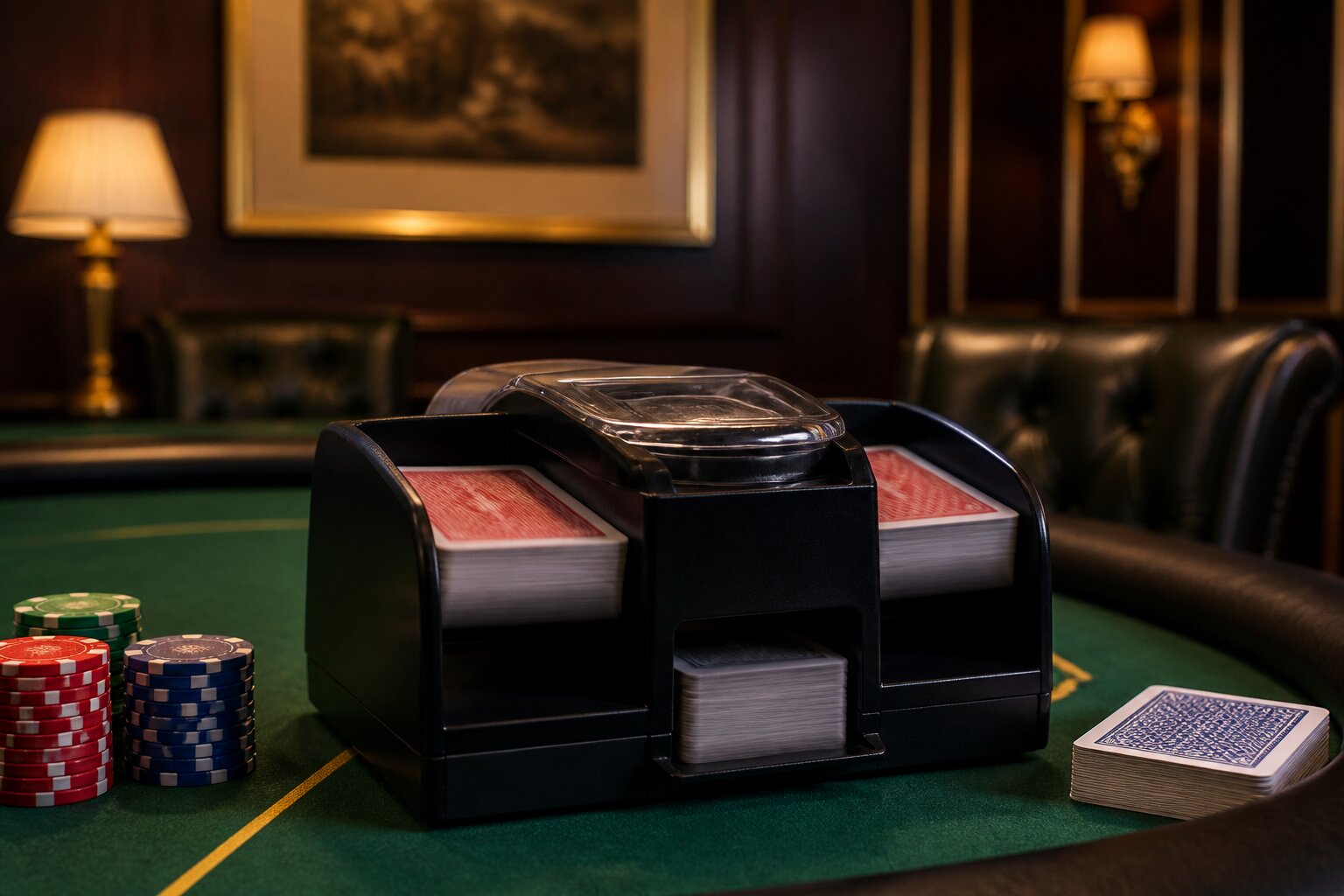
Automatic card shufflers are machines that mix playing cards for casino table games. You’ll see them at many venues and in live-streamed dealer games where speed and consistency matter.
Their role is to randomise the order of cards quickly, reducing the chance of human error and the predictable patterns that can arise from manual shuffling. Dealers place used cards into the machine and receive a freshly mixed set back in moments, keeping the action flowing for everyone at the table.
Because they standardise the shuffle, these machines aim to make each hand as fair as possible while also improving pace of play and operational accuracy.
How Do Casino Shuffle Machines Work?
Inside an automatic shuffler you’ll find mechanisms such as rollers, small compartments and arms that separate, interleave and recombine cards. These components break the deck into parts and mix them together in ways that prevent simple ordering patterns from remaining intact.
The machine performs this mixing automatically, with the internal process closed to players and staff to avoid tampering. Many units are sealed or locked so that only authorised personnel can access them for maintenance or checks.
From a practical perspective, the machine replaces the variety of hand-shuffle techniques with a consistent mechanical process that aims to produce a thoroughly mixed deck every time. This consistency is part of why casinos use them: they reduce mistakes and unwanted repeatable sequences that can occur with human shuffling.
Are Shuffle Machines Truly Random?
Manufacturers design shuffle machines to produce an unpredictable order of cards on each cycle. To support that aim, machines undergo technical assessments that measure how closely their outputs match expected randomness benchmarks.
In the UK, shuffle machines intended for licensed venues must meet regulatory requirements and pass independent testing before they may be used in play. That testing examines whether any bias or repeatable pattern exists and checks that the internal mechanics behave as specified over large numbers of shuffles.
While no process can promise absolute perfection in every single shuffle, the combination of engineering standards and formal testing makes the outcome of a shuffle machine comparable to a strong manual shuffle in terms of unpredictability.
Can Shuffle Machines Be Manipulated?
Concerns that machines might be altered deliberately to favour the house are understandable, but licensed venues operate under strict controls to prevent that. Access to the machine internals is limited to trained staff, and many units are locked or sealed to deter unauthorised interference.
Regulated casinos carry out routine inspections and maintenance, and independent auditors may verify both the hardware and the testing records. Any tampering would create regulatory and legal risks for operators, so compliance procedures are a key deterrent.
Taken together, physical safeguards, operational procedures and oversight reduce the practical possibility of manipulation in a regulated environment.
If you’re curious about a particular venue’s practices, asking staff about inspection routines and machine provenance can provide reassurance.
Common Myths About Automatic Shufflers
A few persistent myths surround automatic shufflers; separating fact from fiction helps explain why most of these worries aren’t grounded in evidence.
Myth 1: “Machines follow a pattern, so you can predict the next cards.”
Machines are tested for statistical randomness to ensure they do not produce predictable, exploitable patterns.
Myth 2: “Shufflers are made to make players lose more often.”
The house advantage in any casino game comes from the game rules and paytable structures, not from how the cards are mixed. Independent testing looks for bias that would change expected outcomes.
Myth 3: “Dealers can control the outcome by fiddling with the machine.”
Access controls, seals and audit trails limit what staff can do with machines. Oversight from regulators and auditors further reduces the chance of tampering.
Understanding these points helps clear up common misconceptions and shows where real controls are applied.
Do Shuffle Machines Give Casinos an Unfair Advantage?
Shuffle machines themselves do not create the house edge; that edge is built into the rules and payouts of each game. The machine’s function is to randomise card order reliably, not to alter probabilities in the casino’s favour.
Regulatory frameworks require equipment used in licensed venues to be tested and certified. This helps ensure that machines produce outcomes consistent with the expected statistical properties of the game, preserving fairness for players and operators alike.
If you want to evaluate fairness, focus on the rules in play—deck count, dealer rules, payout rates—rather than assuming the shuffle mechanism is responsible for any disadvantage.
How Are Shuffle Machines Tested for Fairness?
Before a shuffle machine reaches the gaming floor it typically passes through independent laboratory tests that analyse its output over many thousands of shuffles. Testers look for statistical bias, repeatability and mechanical consistency under different conditions.
Testing also includes checks on firmware, physical components and failure modes. After approval, periodic audits and maintenance ensure that wear or software changes don’t introduce problems over time.
These assessments are technical and data-driven: rather than relying on a single check, they use repeated sampling and analysis to confirm the machine behaves within accepted parameters.
If a machine fails to meet standards, regulators and operators remove or repair it until it conforms again.
Shuffle Machine Certification & Regulation in the UK
Shuffle machines used in licensed UK venues must meet regulatory certification before being used in play. That certification process evaluates several aspects of the device, including:
- technical performance, such as randomisation and repeatability of outcomes
- compliance with relevant standards and technical specifications
- the integrity of the device in an operational setting, including tamper-resistance and secure access controls
Certification commonly involves testing by accredited laboratories or notified bodies and submission of evidence to the regulator. Manufacturers and suppliers will normally provide technical documentation, test reports and a conformity assessment to demonstrate that a machine meets the required standard.
Regulators maintain a framework of rules and testing expectations, and they require operators to keep clear records of inspections, maintenance and any incidents. These records typically include:
- routine maintenance logs and servicing dates
- inspection reports and test results
- details of any faults, remedial actions and timeline of repairs
This continuous oversight helps ensure that approved equipment continues to meet its original certification requirements while in service. Periodic retesting or recalibration may be required, and regulators can request documentation or take enforcement action if standards are not upheld.
Operators are expected to follow these rules and make documentation available to inspectors, so players can rely on an established compliance ecosystem. Staff should also be trained in the correct operation and basic checks of shuffle machines to support ongoing compliance and safeguard integrity.
Should Players Trust Automatic Card Shufflers?
It is reasonable to question the technology used around the table. In the UK, the combination of independent testing, regulatory oversight and venue-level controls provides a level of assurance that shuffle machines are designed and maintained to produce fair outcomes.
Trust in the system is supported by transparency: certified equipment, documented inspections and clear rules about how games operate. When software and hardware are independently tested and the results published to regulators, that helps establish confidence that the device performs as intended.
If any part of that chain is missing at a venue, it is a valid cause for concern. Lack of visible certification, unclear inspection records or vague operational procedures should make players more cautious.
As a player, looking for visible certification and asking about inspection routines are practical ways to check that a venue takes fairness seriously. Useful things to ask or look for include:
- Whether the shuffler carries a visible certification label or serial number.
- How often the machine is inspected or tested and who conducts those checks.
- What procedures staff follow if the machine malfunctions or shows errors.
If answers are not forthcoming, consider speaking to management or choosing a different table. Being informed and vigilant helps protect your interests and contributes to a fairer playing environment.
Choosing Casinos With Trusted Shuffle Machines
Selecting a casino that follows recognised standards helps ensure the machines and games you play meet the required checks and balances.
Look for a licence from the appropriate regulator, clear statements about equipment certification, and a willingness from staff to explain inspection and maintenance practices. These are practical signs that a venue is committed to operating within regulatory expectations.
Our commitment is to use only certified equipment and to follow all applicable inspection and reporting requirements. If you have questions about our procedures, our team is ready to provide the necessary information so you can make an informed choice.
Play within your limits and choose venues that make their compliance practices clear — that’s the best way to protect your experience and feel confident about the fairness of the games you join.
**The information provided in this blog is intended for educational purposes and should not be construed as betting advice or a guarantee of success. Always gamble responsibly.