
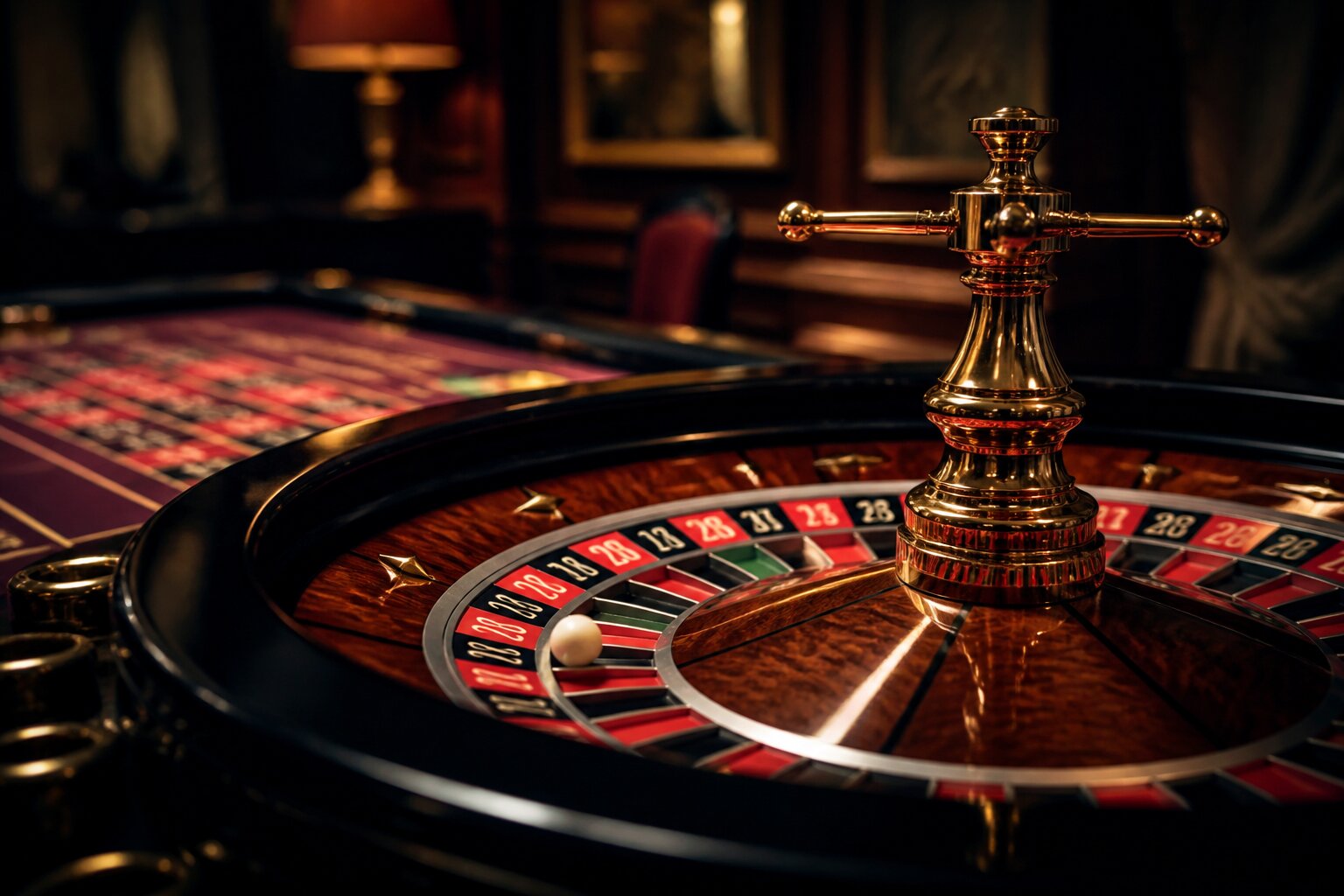
Roulette is one of the most exciting games you’ll find in any casino. The spinning wheel, the bouncing ball and the uncertainty of where it will land create the tense moments players enjoy.
Over time, many players have started to believe they can spot patterns as they watch the wheel turn. Could the key to predicting the next number be hidden in previous results, or is it simply a trick of perception? If you’ve ever thought you were onto a streak, this article looks at the patterns players often spot and explains what they really mean.
What Are Roulette Patterns?
Roulette patterns are sequences or trends some players believe they see when watching spin outcomes. These might be repeated colours, like several reds or blacks in succession, runs of odd or even numbers, or clusters of neighbouring numbers on the wheel. Players also look for “hot” numbers that have appeared often during a session or short bursts where the ball keeps landing in one section of the wheel.
These observations are drawn from previous results and reflect how humans seek order in random situations. They are useful as a way to describe what’s happening at the table, but they do not change the mechanics behind each spin. This distinction — between noticing patterns and the idea that they influence future results — is central to understanding roulette, and it leads into how randomness and fairness are enforced in modern play.
Do Patterns Really Exist in Roulette?
Patterns such as repeated colours or number clusters do appear in roulette sessions, but their existence as observable sequences does not imply predictive value. The wheel is engineered so that each spin is an independent event; online games use tested Random Number Generators and land-based wheels are checked and maintained to the same high standards. These measures are part of regulatory oversight that keeps outcomes fair.
Because each outcome is independent, spotting a run of similar results is simply an expected feature of random sequences. Statistical clusters will occur naturally over time, and the presence of a house edge means the game remains mathematically favoured to the operator across many spins. The next section explores the types of patterns players commonly point out, and how to recognise them without assuming they change the odds.
Recognising Types of Roulette Patterns
Players are drawn to patterns, and certain types recur in many sessions. Distinguishing these categories helps clarify what observations mean and why none of them can be used to predict future spins.
Number Clusters and Repeats
Some spins produce back-to-back appearances of the same number or neighbouring numbers on the wheel. Examples include:
17, 17, 20, 18
8, 8, 29
31, 32, 33
These clusters can look significant, especially when a particular sequence appears to repeat, but they are simply one possible arrangement within a random sequence of results. Short runs and local groupings are expected outcomes in any independent sequence of spins, and noticing them is often more about human pattern-seeking than about an underlying cause.
When evaluating clusters it helps to remember that a single cluster tells you very little about the long-term behaviour of the wheel. Over many spins, apparent clusters tend to balance out with runs of the opposite kind, so isolated examples do not confer useful information for predicting what will come next.
Red/Black and Odd/Even Streaks
Colour and parity streaks are easy to spot and memorable when they happen. Typical examples might read:
Red, Red, Red, Red, Red
Even, Even, Even, Even, Even, Even, Even
Black, Black, Black, Black, Black, Black
Such runs are entirely plausible in random play and carry no predictive advantage for subsequent spins. The occurrence of a long streak does not change the underlying probabilities for the next spin, and treating a past streak as if it affects future outcomes is a well-known cognitive error.
Players often misinterpret streaks because they expect short-term results to mirror long-term averages. In reality, random sequences can and do produce long streaks, and those streaks will appear from time to time without indicating any shift in likelihood on the next spin.
Patterns in Wheel Bias Claims
Historically, a small number of physical wheels developed consistent biases because of wear or manufacturing faults, and some players attempted to exploit those flaws by tracking results over long periods. Modern casinos and regulatory checks greatly reduce the chance of such bias today. Where players discuss wheel bias now it is usually a reference to an outdated phenomenon rather than a practical strategy.
Casinos routinely inspect and maintain equipment, and independent regulators monitor fairness, so any persistent mechanical bias is rare in licensed venues. Claims of bias should therefore be treated with caution, and long-term, carefully controlled data would be required to demonstrate a genuine mechanical fault rather than ordinary random variation.
Having looked at the common pattern types, the next section explains the statistical principle that underpins why these observations cannot be used to forecast spins.
Randomness and Roulette Spin Outcomes
Randomness in roulette means each spin occurs without influence from what came before. In statistical terms, spins are independent events: the result on one spin does not affect the distribution of outcomes on subsequent spins.
Online roulette relies on Random Number Generators that are regularly tested and certified, while physical wheels undergo routine maintenance and auditing. These safeguards preserve the independence of each spin and ensure the stated probabilities remain accurate. For example, in European roulette each individual number has a fixed probability on every spin, and the relative chances of red or black remain constant from one spin to the next.
Understanding independence and constant probabilities clarifies why pattern-spotting cannot alter the odds. The next section discusses the practical impossibility of predicting future spins, and what that means for anyone watching a table.
Can You Predict Future Roulette Spins?
Predicting future spins is not possible in a reliably repeatable way. Because every spin is independent and probabilities are fixed, past outcomes have no bearing on the next result. For instance, the likelihood of any single number in European roulette remains 1 in 37, and the probability of red or black stays at 18 out of 37 on each spin, irrespective of previous sequences.
Players sometimes adopt betting systems or track results in the hope of gaining an edge, but such approaches cannot overcome the built-in house margin or change the fundamental probabilities. Regulatory standards and certified systems are in place to maintain this fairness. The following section examines why player psychology gives rise to beliefs in patterns despite these technical realities.
The Role of Myths and Player Psychology
Beliefs about predictable patterns often stem from normal human tendencies to find meaning in randomness. One common example is the gambler’s fallacy — the idea that a long run of the same outcome makes the opposite outcome more likely. That thinking ignores the statistical independence of spins and can lead to increased betting based on a mistaken sense of inevitability.
Other myths include the notion of “hot” or “cold” numbers that are thought to be more or less likely based on recent history. In a properly run game each number maintains the same chance on every spin, so these labels are descriptive of past events only and do not signal future performance.
Recognising these cognitive biases helps players keep perspective. It encourages measured play and an awareness that observed streaks are part of natural statistical variation, not indicators of a change in the underlying mechanics.
Play Casino Games Online at Easy Slots
Discover how straightforward it is to play your favourite casino games with us at Easy Slots. Our site is designed to make joining a relaxed and enjoyable experience from the moment you arrive.
You only need to create an account and add funds to get going—then you’re all set for plenty of entertainment. We’re always on hand if you need any help along the way, and we look forward to welcoming you.
**The information provided in this blog is intended for educational purposes and should not be construed as betting advice or a guarantee of success. Always gamble responsibly.