
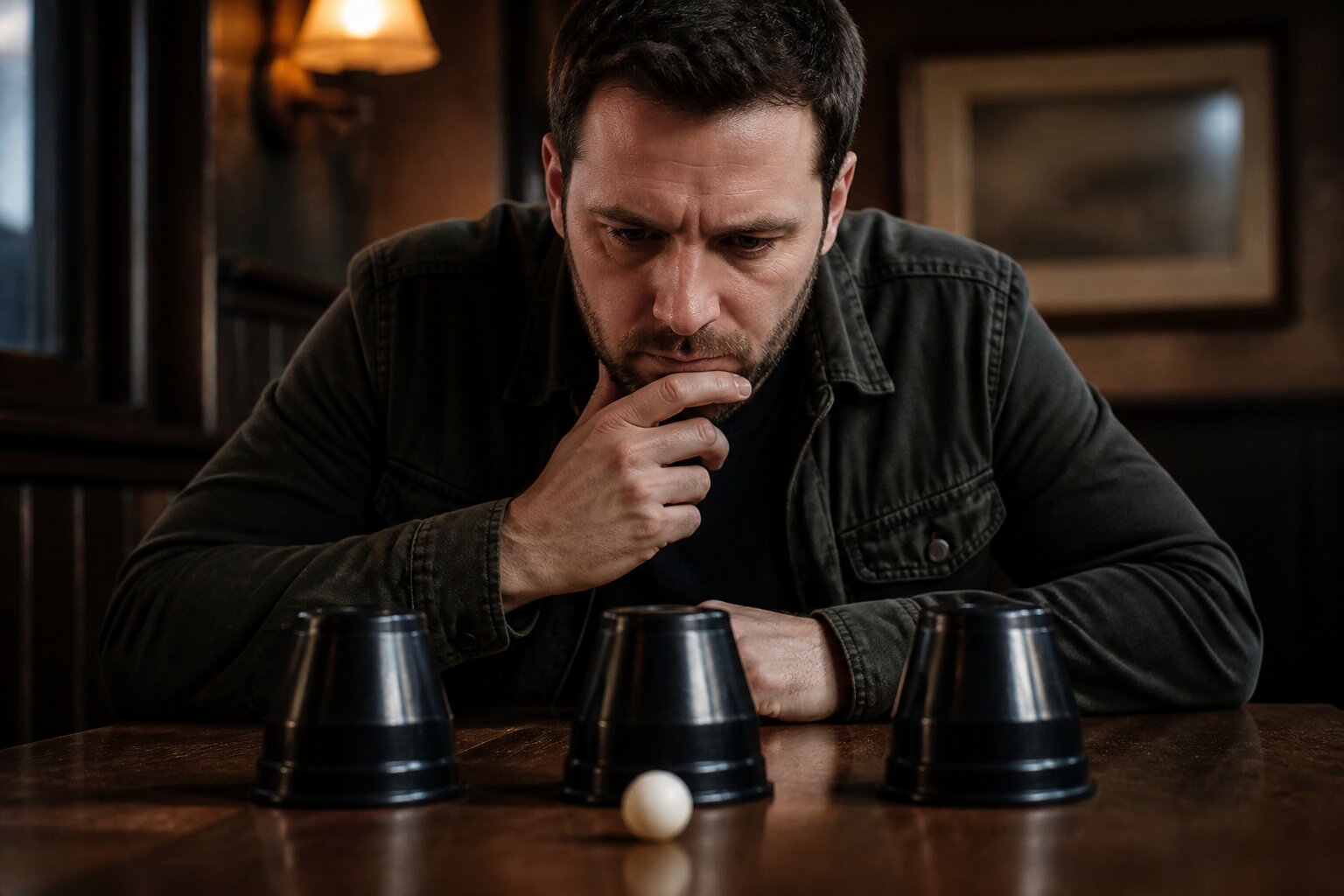
Ever wondered if there’s a secret formula to winning a spot the ball competition? You’re not alone. Many players look for tips that might give them an edge, and the internet is full of confident claims that are hard to verify.
Forums and social posts often blur the lines between experience and hearsay, which can leave hopeful entrants confused. This article cuts through the noise and explains how these competitions actually work, what judges consider, and which common ideas simply don’t hold up.
If you want clear, practical information about spot the ball contests and what matters most, read on — the next section lays out the mechanics so you know what you’re up against.
How Do Spot the Ball Competitions Actually Work?
Spot the ball contests present a photograph from a football match with the ball digitally removed. Entrants mark where they think the centre of the ball was at the moment the picture was taken. After entries close, a panel of independent judges examines the original image and each independently indicates their estimate of the ball’s position. The official winning spot is calculated from those judges’ marks.
Regulation requires transparency about eligibility, rules, and prizes, and operators publish clear terms and conditions for each game. Entry is based on skill because it relies on players’ visual judgement of the image, while the judges’ aggregated decisions determine the official spot. Tickets are usually sold individually so multiple entries increase the number of attempts a person has, but they do not change how the winning position is selected.
Understanding this setup helps make sense of how judges operate and why certain commonly held beliefs about the contests are misleading. This leads naturally into what those misconceptions are and why they persist.
Common Myths About Spot the Ball Contests
These competitions attract a lot of speculation. Some myths take hold because the process feels mysterious to anyone who has not seen the judging firsthand. Clearing up these misconceptions helps people make informed choices when they decide to enter.
One widespread belief is that images follow repeating patterns or that past entries reveal a secret method for placing markers. In actuality, each photograph is chosen independently and the judges evaluate only the evidence in that specific image. They are instructed to work independently, and the winning spot is a balanced reflection of their combined judgements.
Another frequent idea is that submitting an entry at a particular time, or repeatedly targeting certain areas of the image, will improve chances. Entries are treated equally regardless of when they arrive, and no timing advantage influences the judged outcome. The selection of the winning spot happens only after judging is complete and is not affected by entry order.
Knowing these facts clarifies why advice found online often fails to produce consistent results, and it sets up the next topic: how judges arrive at their decisions.
Are Spot the Ball Competitions Rigged or Fair?
Concerns about fairness are understandable when money or valuable prizes are involved. The structure of these contests is designed to ensure fairness: judges work independently, a fixed method is used to calculate the winning position, and operators publish the rules and procedures that govern each competition.
Auditing and regulatory oversight require that processes are followed and recorded. Judges do not have access to entries when marking the image, and their individual decisions are combined in a way that prevents any single opinion from dominating the result. Transparency around rules and prize allocation helps participants understand how outcomes are reached.
If someone doubts the fairness of a particular contest, the terms and supporting documents for that game are the place to look for detailed explanations of how the result was achieved. With that clarified, the next section explores what judges actually focus on when they make their marks.
What Judges Really Look for in Spot the Ball
Judges examine the photograph carefully, taking into account the players’ stances, limb positions, trajectories suggested by body angles, and the direction of gaze. These visual cues can suggest where the ball was at the precise instant the image captures. Experience in football or officiating helps judges interpret subtle indicators such as a player’s foot placement or the way other players react.
Each judge marks independently and follows a prearranged method for submitting their estimate. Once all marks are in, a mathematical process determines the official spot so that the outcome reflects the collective judgement rather than a single viewpoint. Compliance checks ensure that judges follow instructions and that the result can be verified against the stated procedure.
Understanding these criteria shows why some entries appear very close while others are clearly far from the winning position, and it leads into whether studying past winners can be helpful.
Can Previous Winners Give You an Advantage?
Accounts from previous winners are interesting but not a reliable blueprint. Because each contest is based on a different image and the judges’ responses to that image, a method that worked once will not necessarily help in another contest. Winning entries may reveal how someone interpreted the clues in a specific photograph, but they do not create a transferable system.
Stories from winners can nonetheless be useful in illustrating how careful observation pays off in individual cases. They show the kinds of visual details judges weigh, such as body orientation or the apparent flight path of the ball. These examples are instructive for learning what to look for, but they should be treated as descriptive rather than prescriptive.
With that perspective on past winners, it is useful to consider how skill and unpredictability interact in the overall outcome.
Understanding the Role of Skill Versus Chance
Spot the ball rewards observational skill because players use the image’s visual information to form an educated estimate. Judging aims to capture an expert interpretation of that same image. Because the official spot is derived from a panel’s combined marks, matching those judgements requires both careful analysis and an alignment with how the judges read the photograph.
There is an element of unpredictability because two reasonable observers can disagree about the same image. This does not mean results are random; rather, it reflects the inherent uncertainty when multiple independent estimates are combined. For entrants, the sensible approach is to view the competition as a skills-based challenge with uncertain outcomes, not as a guaranteed route to a prize.
Keeping a clear understanding of the contest’s nature also supports sensible participation and realistic expectations, which brings us to a concise summary of the key takeaways.
Summary: Debunking the Myths and Knowing the Facts
Spot the ball competitions centre on visual judgement and independent expert assessment. Myths about secret patterns or timing strategies do not hold up because each image is judged on its own evidence and entries are treated equally. Independent panels, transparent procedures, and published rules underpin the integrity of the process.
Previous winners’ accounts are informative but not definitive guides, and skillful observation improves an entrant’s chances without ensuring a match with the judges’ marks. Players should enter with realistic expectations and follow the published terms for each contest.
These competitions are best approached as a test of visual judgement and an entertaining challenge, with fairness and transparency at their core.
**The information provided in this blog is intended for educational purposes and should not be construed as betting advice or a guarantee of success. Always gamble responsibly.