
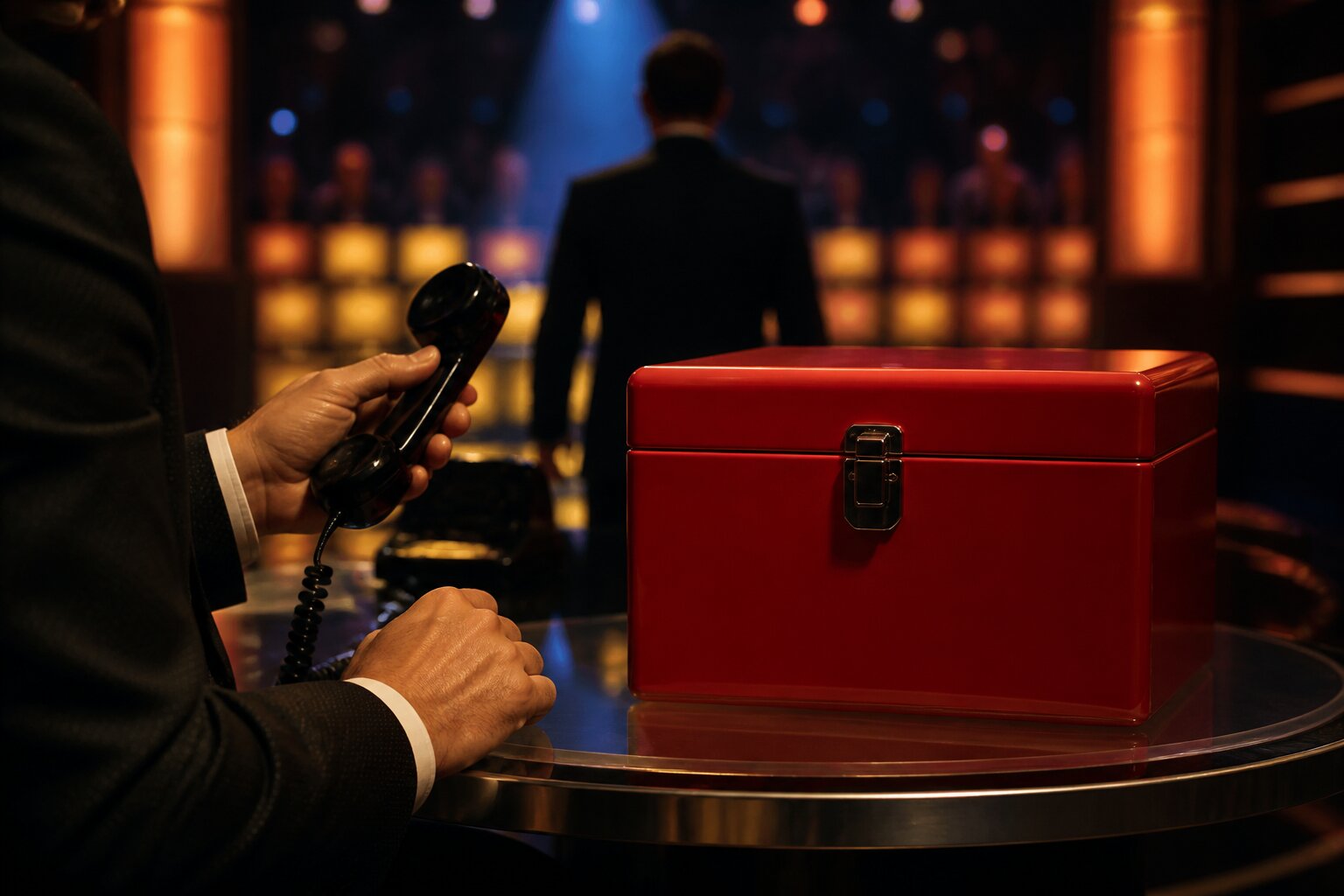
Ever sat on the edge of your seat watching Deal or No Deal, wondering if there’s more to the game than what you see on screen? You’re not alone — the dramatic offers from the Banker and sudden swings in prize values make the show feel intense and mysterious.
Since it first aired, Deal or No Deal has kept viewers hooked with its mix of suspense and choice. But are outcomes genuinely random, or is something else happening behind the scenes? Read on and we’ll unpack how the show operates, what the rules require, and whether there is any real reason to doubt its fairness.
How Does Deal or No Deal Actually Work?
Deal or No Deal is built around randomised prize allocation and the decisions a contestant makes as information is revealed. At the start, sealed boxes contain a range of cash amounts. One contestant selects a box to keep and the rest are opened across several rounds, removing known amounts from play and changing the statistical profile of the remaining boxes.
Periodically the Banker makes a cash offer to purchase the contestant’s box. Those offers are informed by the values still in play and by how willing the contestant appears to be to risk continuing. Offers typically reflect the expected value of remaining amounts, adjusted for behavioural factors to create tension and to encourage decision-making.
The drama comes from uncertainty: every opened box alters the set of possible outcomes and the size of future offers. The show is therefore a mix of revealed information and choice where probability and human behaviour interact.
What Are the Rules Governing Game Show Fairness?
UK television game shows operate under strict broadcasting standards to ensure contests are conducted honestly and transparently. Ofcom enforces rules that cover how competitions are run, how winners are chosen, and how viewers and contestants are treated.
Key requirements include clear contest rules, visible safeguards around prize assignment, and independent oversight of any randomisation processes. When a show involves monetary prizes selected at random, regulatory expectations are aimed at preventing misinformation and ensuring the outcome cannot be influenced improperly.
Regulatory attention is not about interfering with on-screen drama; it’s about protecting participants and maintaining public trust in broadcasts. That framework underpins how producers plan and operate such programmes.
Is There Evidence of Rigging or Manipulation on Deal or No Deal?
Despite widespread speculation, there is no credible evidence that Deal or No Deal has been rigged. Investigations and audits carried out over the years have not revealed manipulation of prize contents or the outcome process.
Observers, contestants and press reports consistently describe strict handling of sealed boxes and independent verification of allocations. Those procedures are designed so that only authorised, impartial staff know the contents before play begins, making clandestine tampering highly unlikely.
Claims that the Banker or production staff secretly influence outcomes have not been substantiated. Where questions have arisen, official reviews have tended to confirm that processes were followed correctly rather than uncover wrongdoing.
Common Myths About Game Show Scandals
Old scandals from different eras of television sometimes get conflated with modern programmes, creating confusion. When viewers cite alleged scandals, they are often recalling unrelated incidents or sources that lack verification.
Rumours about staged outcomes rarely survive scrutiny because audits and independent adjudication are standard practice. Where a show is under suspicion, regulatory bodies have the authority to investigate and publish findings, which typically clarify whether procedures were breached.
If you find an allegation online, the most reliable approach is to look for official statements or regulator reports rather than relying on hearsay.
How Are Contestants and Boxes Selected?
Contestant selection involves application and casting processes intended to find people who can represent a range of backgrounds and personalities. Screening ensures participants understand the format and are fit for the environment of a televised show.
Prize amounts are assigned to boxes before filming and sealed under supervision. Independent adjudicators or impartial staff oversee the allocation and sealing to preserve anonymity of contents. This separation prevents anyone involved in day-to-day production from knowing which box contains which amount once filming begins.
Contestants make their initial box choice with no extra information about contents. From then on, the sequence of opened boxes and revealed amounts is what shapes the remainder of the game.
A clear, documented chain of custody for the boxes and the involvement of independent observers are key elements that give producers and viewers confidence the allocation is genuine.
What Probability Plays a Role in the Game’s Outcomes?
Probability shapes how contestants and viewers should understand the unfolding game. At the outset, each box has the same statistical chance of holding any listed prize. As amounts are revealed, that symmetry breaks and probabilities update to reflect the new mix of remaining values.
For example, if only one high-value prize remains among five unopened boxes, the chance any particular box contains it is 1 in 5, or 20 per cent. The Banker’s offers tend to reflect the expected monetary value of the remaining amounts, often adjusted to account for risk preferences and to create tension in the narrative.
Because allocations are randomised and sealed, no strategy can guarantee a particular outcome; instead, decisions are about weighing the expected value against how the contestant responds to risk and new information. Understanding these mechanics helps explain why offers move the way they do, and why outcomes may still surprise viewers.
What Regulatory Bodies Oversee TV Game Shows in the UK?
Ofcom is the principal regulator for broadcast contests, with rules aimed at fairness, transparency and the protection of viewers. Their oversight includes reviewing how competitions are organised and ensuring that broadcasts are not misleading.
In cases where programmes include elements that resemble gambling or present monetary prizes awarded by chance, the UK Gambling Commission provides guidance on consumer protections and responsible practice. The two bodies operate independently from producers and help set the standards shows must meet.
Regulatory scrutiny, independent audits and documented procedures together create a compliance environment that producers must follow if they want to retain public trust and broadcast licences.
Can the Banker Influence the Game’s Fairness?
The Banker is an on-screen device designed to create tension, offering cash in exchange for a contestant’s chosen box. While the Banker’s offers are an important part of the show’s structure, they do not alter the pre-sealed contents of the boxes or the random allocation process.
Offers are typically calculated with reference to the average of the remaining prize amounts, sometimes adjusted by behavioural cues to shape the drama. Independent oversight and internal controls prevent offers from being used to change outcomes retrospectively.
So, while the Banker influences a contestant’s decision-making, that influence operates within the established rules of the game rather than by changing the underlying probabilities or prize assignments.
How Do Viewers Know Deal or No Deal Is Fair?
Transparency measures give viewers reasons to trust the show. Independent observers monitor the sealing and allocation of prize amounts, and documented procedures govern custody and access to the boxes. Broadcast regulators review processes and can investigate if concerns are raised.
On set, a range of visible controls and practices help reassure viewers. Cameras, tamper-evident seals and public procedures for revealing box contents all contribute to an open process. Chain of custody is recorded so it is possible to see who had access to each box and when.
Formal safeguards often include independent auditing and secure storage before recording, together with written logs and witness signatures to create an audit trail. These measures are designed to make manipulation difficult and to support confidence in the outcome.
When disputes or doubts appear, regulators have the power to request records and to publish findings that clarify what happened. That external accountability, alongside visible on-set procedures, is what underpins public confidence.
If viewers want to learn more about the safeguards used in particular productions, official regulator reports and broadcaster statements are the best sources of verified information. Typical sources to check include:
- regulator investigation reports and published findings
- broadcaster compliance statements and procedural summaries
- independent auditor reports or certification where available
Final Thoughts on Deal or No Deal’s Integrity
Deal or No Deal operates within a framework of documented procedures, independent oversight and regulatory review that together make clandestine manipulation unlikely. Prize assignments are randomised and supervised, contestant selection is transparent, and offers are calculated with reference to the amounts remaining in play.
Regulatory bodies examine these shows to ensure compliance with broadcasting standards and consumer protections. Over the years, formal checks and public reviews have supported the view that the programme is run with integrity.
We are committed to transparency and participant protection in all aspects of these formats. If you have concerns about fairness or need advice relating to gambling or gaming, official regulator websites offer information and support. Enjoy the show, stay informed, and keep the focus on how the rules, probability and human choice combine to create the drama you watch.
**The information provided in this blog is intended for educational purposes and should not be construed as betting advice or a guarantee of success. Always gamble responsibly.