
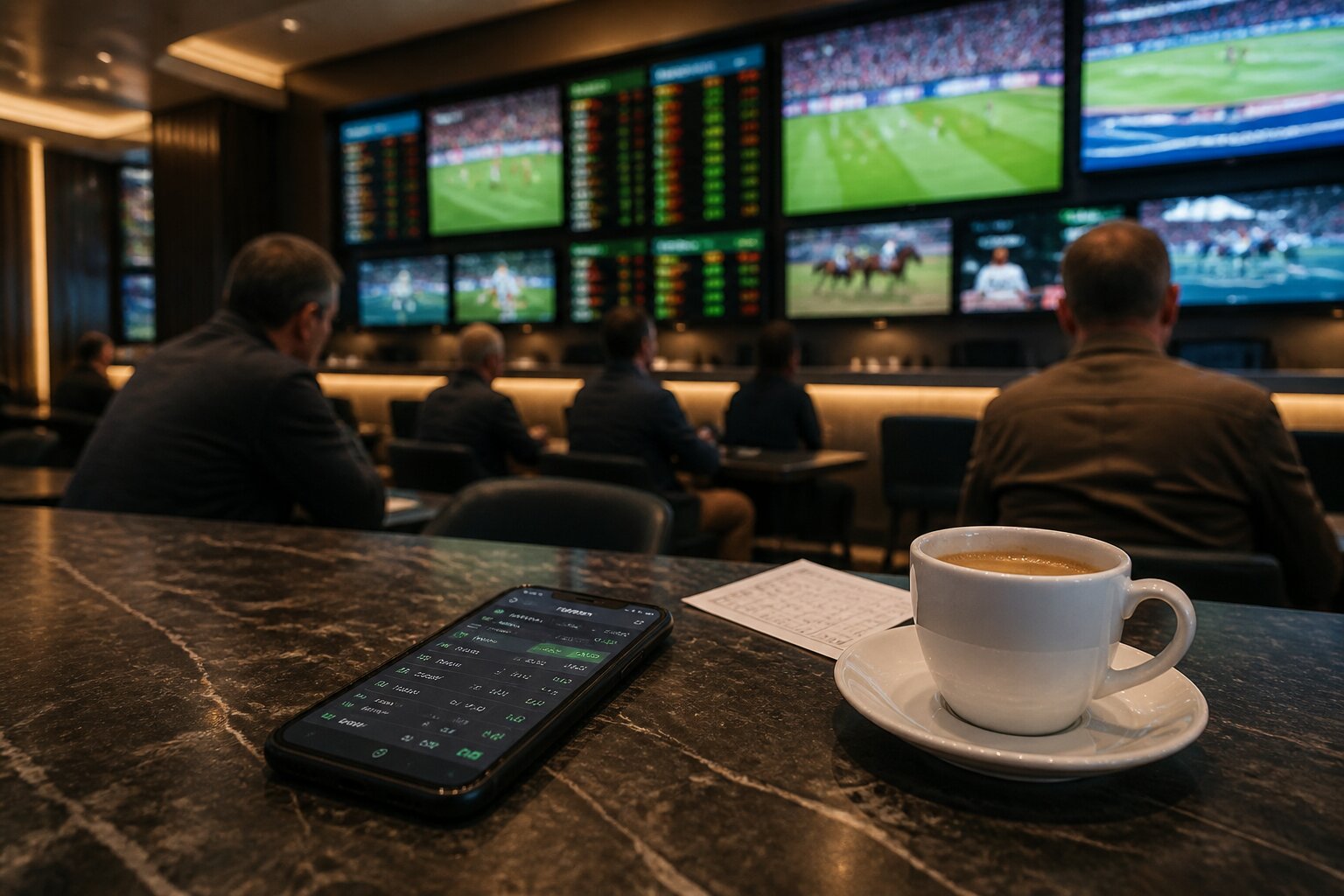
Ever wondered how casinos seem to come out on top when it comes to sports betting? The world of sportsbooks is more than odds and winners; it’s a blend of pricing, risk management and market shaping that keeps the business running.
Whether you bet occasionally or follow events closely, knowing how odds are set and how the operator’s edge works will help you make better-informed choices. Read on for a clear, practical explanation of what goes on behind the odds and why the bookie usually has the long-term advantage.
What Is a Sportsbook and How Does It Work?
A sportsbook is a platform where people place wagers on the outcome of sporting events. These services exist online and in physical venues and offer markets ranging from football and tennis to horse racing and cricket.
The core task of a sportsbook is to set odds that translate event outcomes into prices. Odds show how much a successful bet will return relative to the stake. But odds are not just estimates of outcomes; they are also tools that help balance betting across different results. By adjusting prices, the operator steers how much exposure they carry on any given outcome.
When a bet is placed, the sportsbook accepts the risk of paying out if that outcome occurs. To manage that risk while staying able to pay winners, operators use pricing, limits and other controls. Age and identity checks are standard at the point of account opening, and players are generally offered tools to control their play. These measures support a regulated environment and ensure the service runs smoothly.
Understanding Betting Odds and Margins
Odds convert the likelihood of an event into a number you can use to calculate potential returns. In the UK, odds appear commonly as fractions or decimals. Both formats allow you to see implied returns and compare markets.
Crucially, odds also contain a margin for the operator. That margin is a deliberate portion of the price that guarantees the sportsbook a small edge over many bets. It is visible when the implied probabilities of all outcomes exceed 100 per cent. That excess is how the business offsets payouts, operating costs and occasional large wins.
For a bettor, recognising the margin helps when comparing prices between operators and when assessing value. Odds alone do not promise profit; they frame potential returns while the margin shapes the long-run outcome for the operator.
What Is the Overround and Why Does It Matter?
The overround is the technical name for the combined margin embedded in a market. If you total the implied probabilities of every possible outcome and the sum is over 100 per cent, the difference is the overround.
This figure matters because it quantifies how much the operator expects to keep, in aggregate, from the market. A larger overround means a bigger cushion for the sportsbook and relatively worse value for the bettor. Markets with more competitors or more uncertainty often show higher overrounds, which is why different events and sports deliver different price quality.
Understanding overround helps you compare the efficiency of markets and spot where you might be getting better value.
The Role of the Vig: How Bookies Ensure Profit
The vig, sometimes called juice, is the practical expression of the margin in individual bets. It is the portion of each transaction that feeds into the operator’s revenue model.
Every time a wager is taken, part of the stakes are effectively retained through the pricing structure rather than being paid back to winners. That steady percentage allows the business to cover liabilities and invest in accurate pricing, customer service and fraud prevention. It also smooths the impact of short-term swings in outcomes.
This mechanism is why sportsbooks can survive weeks when many bets win or when big prizes are paid out; the vig has already built a buffer into the market.
Examples of Margin in Popular Sports Bets
Here are some everyday examples that show how margins appear across sports. These give a flavour of how different markets price risk.
- In a football match, two closely matched teams may each have odds implying near-equal chances. Adding those probabilities often results in a total above 100 per cent, which is the margin at work.
- Horse races with large fields tend to carry higher margins because more runners increase uncertainty and administration costs.
- In tennis or cricket, where markets are narrower, margins may be smaller, but they still exist and affect returns over time.
These examples make clear that margins are present across the board, even if their size changes by sport and market.
Are Free Bets and Promotions Really Free?
Promotions are a common way for sportsbooks to attract and retain players, but they always come with conditions. Typical requirements may include:
- a qualifying deposit to activate the offer,
- a minimum priced bet or minimum stake,
- a limited time in which the bonus must be used,
- maximum payout caps on winnings from the promotion,
- restrictions on eligible markets or bet types.
Frequently, only the winnings from a free bet are credited, not the stake itself, and some offers will void a bet if it is cashed out or settled as void. Operators may also impose maximum bet limits while the bonus is active, and accounts that show patterns of bonus abuse can be excluded from offers.
Reading the terms attached to any offer is important. Pay attention to eligibility, wagering requirements, expiry windows and how void or refunded bets are treated, because these details shape the real value of promotions and influence how useful they are for a player.
When used with understanding, offers can enhance the experience and provide extra entertainment value, but they are not a substitute for disciplined play, sound bankroll management or betting within your limits. If you have concerns, check the provider’s full terms and, where available, use tools such as deposit limits or self-exclusion to stay in control.
Common Misconceptions: Do Bookmakers Always Win?
Bookmakers do not win every event. They set prices to include a margin, often called the overround, so that over a large number of bets the operator’s margin produces a predictable advantage. That does not stop upsets or large payouts. Occasionally those outcomes lead to significant losses for the operator, but the pricing model and risk controls reduce how often and how severely that happens.
Risk controls take several forms. Bookmakers can adjust odds as money comes in, limit stakes on particular markets, or lay off exposure with other firms. They also monitor accounts for unusual activity and use limits to protect against coordinated or professional staking that would expose them to excessive risk.
When bettors win consistently over time, it is usually because they are finding genuine value in the market or exploiting pricing differences between operators. That can involve:
- identifying odds that do not reflect available information;
- using speed and technology to back favourable prices before they move;
- taking advantage of small discrepancies between firms for arbitrage.
These opportunities exist, but they are typically narrow and require skill, discipline and sound bankroll management to be sustained. For most people, betting remains an occasional activity rather than a steady income source, and unpredictable variance means short-term wins do not guarantee long-term profit.
Remember to gamble responsibly and only bet what you can afford to lose. If gambling ceases to be fun or becomes a problem, seek help from recognised support services.
Regulation and Fairness in Sports Betting
The betting sector operates under regulatory standards that require transparent terms, secure handling of funds and customer protections. Licensed operators must demonstrate fairness in how markets are offered and how personal and financial data are processed. Regulators also expect firms to maintain adequate financial resources, carry out independent audits and keep records that allow for oversight and accountability.
Part of this framework includes measures that help players set boundaries and seek support if they feel their activity is becoming problematic. Operators are typically required to provide tools and information for safer play, to train staff in recognising signs of harm and to make referral routes to support services available. These steps are intended to reduce risk and encourage responsible behaviour among customers.
Clear information about the rules for each market, visible odds and straightforward complaint processes are all part of maintaining trust between operator and customer:
- Clear rules for how bets are settled and what constitutes a winning outcome.
- Prominent display of odds and any limits or restrictions that may apply to a market.
- Simple, accessible complaint and dispute resolution procedures, including information on escalation to the regulator.
These structures aim to keep the market functioning openly while protecting participants and their money. They also support wider confidence in the industry by promoting consistency of standards, enabling fair competition and making it easier for consumers to make informed choices.
How Casinos Balance Risk and Payouts
Balancing risk involves constant monitoring of betting flows and adjusting prices accordingly. When a large number of bets cluster on one outcome, operators may alter odds or set limits to reduce concentration and preserve a manageable exposure.
Behind the scenes, risk teams use models and historical data to estimate potential liabilities and to set prices that reflect both probability and commercial considerations. That approach allows sportsbooks to pay winners fairly while ensuring the business can continue to offer markets to everyone.
Limits or restrictions you may encounter are part of that broader effort to maintain market stability and a sustainable operation.
Why Do People Keep Betting If the Odds Favour the Casino?
People bet for a variety of reasons. Common motivations include:
- extra engagement and interest when following a match or tournament
- the social aspect of shared predictions and conversation around an event
- the search for value where bettors believe markets are mispriced
Although the operator’s margin plays a consistent role in shaping long-term outcomes, it does not remove the entertainment element for most participants. For many, a small stake enhances the viewing experience without being seen as a financial strategy.
Responsible, affordable play helps people enjoy the added dimension betting provides while keeping risk under control. Practical measures include setting a budget, treating betting as recreation rather than income, and walking away if it stops being fun. If you are concerned about your gambling, seek help and use available support tools.
Summary: Key Points on Sportsbook Profits
This section pulls together the main ideas so you can see the full picture.
How Sportsbooks Work
Sportsbooks set prices that show potential returns and contain a margin. That margin covers costs, funds payouts and creates a long-term advantage for the operator.
Why Margins Exist
Margins provide a buffer against unpredictable results and make it possible for the market to pay winners while remaining commercially viable.
Our Commitment to Fairness
As an operator, we follow regulatory standards, give clear terms on offers, and provide tools so customers can control their activity. If you have concerns about your gambling, support and guidance are available.
Understanding how sportsbooks make money helps you approach betting with realistic expectations. If you choose to take part, do so in a measured way and only with funds you can afford to lose. That keeps the experience focused on enjoyment and within safe boundaries.
**The information provided in this blog is intended for educational purposes and should not be construed as betting advice or a guarantee of success. Always gamble responsibly.