
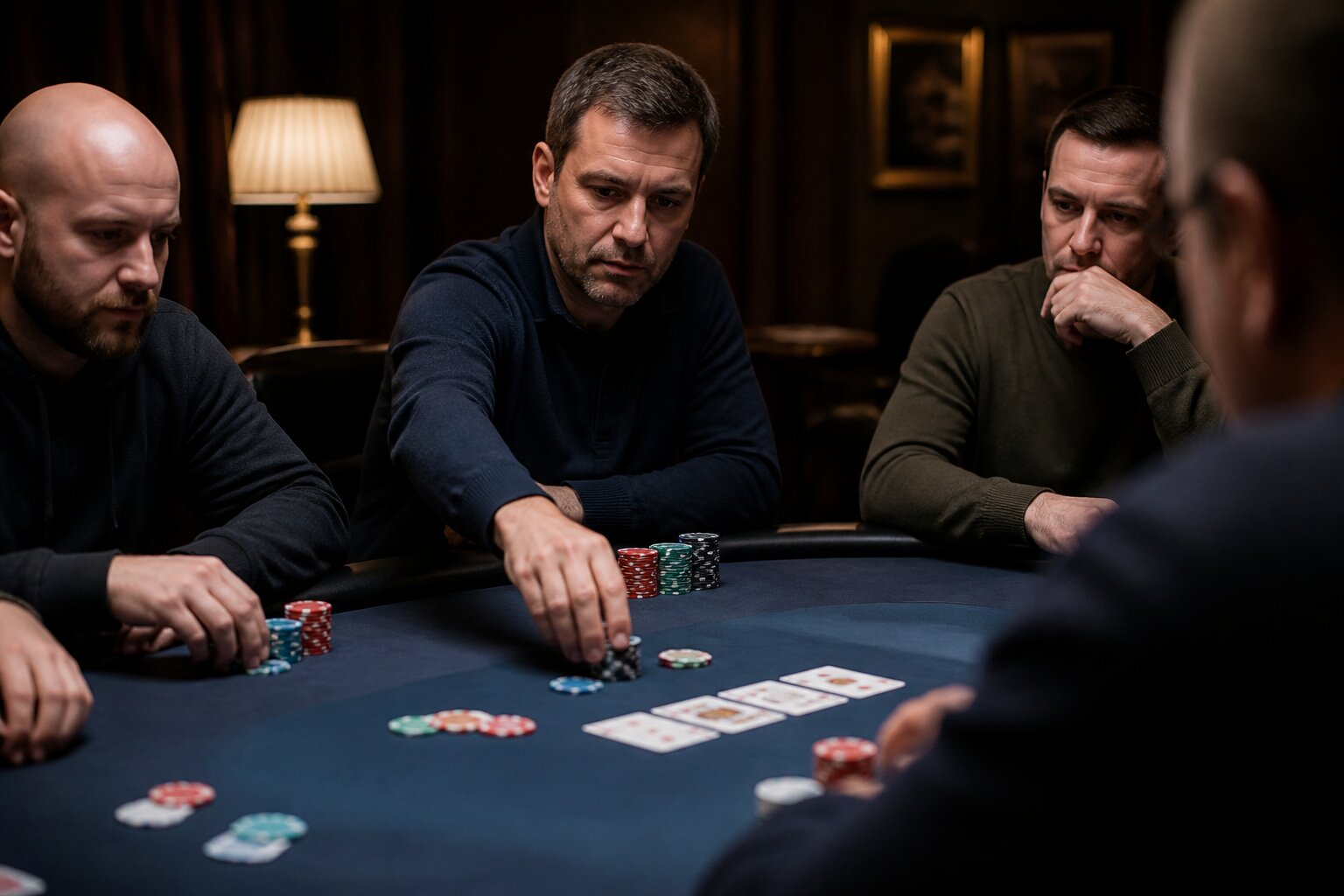
Ever sat at a poker table and heard someone grumble about a “donk bet”? It’s a term that sparks confusion and debate, even among regular players. Maybe you’ve been on the receiving end, wondering if it’s a rookie mistake or a clever ploy in disguise.
Donk bets aren’t as clear-cut as many believe. Reactions can range from eye-rolls to grudging respect, depending on the table and the players involved.
Understanding this part of poker strategy can change how you see a hand and your approach to the table, whether you’re playing for a tenner with friends or at higher stakes. Read on to learn what a donk bet really is, why players use it, and how opponents usually react.
Understanding the Donk Bet: Definition & Origins
A donk bet describes when a player who was not the aggressor in the previous betting round leads out with a bet at the start of the next one, typically on the flop. This breaks the more familiar pattern where the pre‑flop raiser continues to show aggression on the flop.
The word “donk” comes from “donkey”, a long-standing poker slang term for an inexperienced player, and it originally carried a dismissive tone. That history explains some of the strong opinions around the move, but the term’s connotation has softened as the game and its strategies have evolved.
Picture this common scenario: you call a pre‑flop raise from the big blind, the flop comes, and rather than checking to the pre‑flop raiser you lead out with a bet. That unexpected bet is what players call a donk bet. While some uses of it are indeed mistakes, the play has been adopted as a deliberate tactic in certain situations. This shift in usage is what makes the donk bet worth understanding in depth, and it leads naturally into why players choose it.
Why Do Players Use Donk Bets?
Players use donk bets for several strategic reasons; it’s not only a sign of inexperience. One motive is to surprise or unsettle an opponent and force early information. For example, after calling a pre‑flop raise with a hand like 8♠9♠, a player might lead on a flop of 7♥10♣2♠ to push the raiser into a decision that reveals the strength of their holding.
Another reason is to take control and protect a made hand. If a flop brings A♦7♦3♣ and a caller holds A♥5♥, leading out can deny free cards that might complete a rival’s draw. In that circumstance, the donk bet serves as a defensive tool to secure value and shape the pot.
Donk bets can also be used as semi‑bluffs to build a pot when holding strong draws, or to extract value from hands that would otherwise check behind. A player who flopped a set after calling with small pocket pairs might lead out to increase the chances of being called by a hand that will continue on later streets.
These are tactical choices rather than universal rules; each instance depends on table dynamics, stack sizes and opponents’ tendencies. Knowing the various motives for donk betting helps make sense of how the rest of the hand might play out, which is where common myths about the move start to unravel.
Common Myths About Donk Betting
The donk bet carries plenty of assumptions, and some widely held beliefs don’t hold up when examined. Two of the most persistent myths are worth addressing directly.
Is the Donk Bet Always a Sign of Weakness?
Not always. While inexperienced players sometimes lead with marginal hands, experienced players can use donk bets deliberately to take the initiative or to protect a strong holding. For instance, a player with 6♦7♦ who has a strong draw on a 4♦5♦8♠ flop might lead out to apply pressure and shape the pot, rather than signalling uncertainty.
A well‑timed donk bet can also bait an aggressive opponent into making a mistake, such as raising into a hand that is already well‑ahead. Context is key: the same motion can be weakness in one spot and strength in another.
Do Professional Players Avoid Donk Bets?
No. Professionals and seasoned players will sometimes donk bet as part of a balanced strategy. Against an opponent who c‑bets heavily, leading out can be a countermeasure that forces difficult choices. Televised and streamed games have shown high‑level players donk betting on particular boards to disrupt predictable lines, demonstrate strength or mix up their play.
Believing that donk bets are exclusively the domain of amateurs can make a player predictable and exploitable; recognising that it is a legitimate tool helps in both using and countering the move.
How Does a Donk Bet Affect Table Dynamics?
A donk bet can change the tempo and psychology at the table quickly. When someone breaks from the expected pattern, opponents must reassess ranges and intentions, which often leads to cautious or exploratory play.
For example, a habitual pre‑flop raiser who expects to c‑bet may hesitate after facing a donk bet, sometimes checking behind where they would normally continue. Other players may alter their calling and raising ranges when a known donk bettor is involved, either by calling lighter in search of bluffs or tightening up to avoid tricky post‑flop decisions.
These shifts in behaviour affect not only the immediate hand but how the table interacts in subsequent hands. Being aware of the ripple effects of a donk bet helps players anticipate changes in opponents’ strategies and choose responses that reflect their objectives and risk tolerance. With that in mind, it’s useful to look at the most common ways players react when faced with a donk bet.
Typical Responses to Donk Bets at the Table
Responses most often fall into three categories: calling, raising, or folding, and each choice reflects a different plan for managing the hand.
Calling preserves pot control and allows a player to gather information on later streets. For instance, holding K♠J♠ to a donk bet on J♥7♣2♦, a caller can see how the action develops before committing more chips.
Reraising aims to punish what looks like a loose lead and to seize the initiative. With A♣K♣ on a K♦6♠3♠ flop, a raise tests whether the donk bettor has the resilience or the hand strength to continue, potentially forcing weaker holdings to fold.
Folding is appropriate when the board misses a player’s range and the bet suggests trouble; a player with 9♣9♥ facing a donk bet on Q♠J♦8♠ may opt to preserve chips rather than chase speculative improvements.
Each approach carries trade‑offs, and managing those trade‑offs responsibly is part of sound play. How a player responds also depends on what they want to achieve in the hand — control, value extraction, or pot preservation — and sets the scene for deeper strategic comparisons with other common poker actions.
Donk Bet vs Other Poker Terms: What’s the Difference?
Donk bets sit alongside other strategic moves, and understanding the distinctions helps place them in context.
Donk Bet
Definition: Leading out into the previous round’s aggressor, usually on the flop.
Example: Calling a pre‑flop raise with 8♣9♣, then betting into the raiser on a 6♣7♣2♦ flop.
Continuation Bet (C‑Bet)
Definition: The pre‑flop aggressor bets on the flop to continue the story of strength whether or not the hand improved.
Example: Raising pre‑flop with A♠K♠, then betting on a T♦5♠3♣ flop when action checks to you.
Check‑Raise
Definition: Checking first, then raising after another player bets on the same street.
Example: With Q♠Q♦, checking a 4♣8♠J♥ flop and raising once an opponent bets.
Value Bet
Definition: Betting with a hand believed strong enough that worse hands will call.
Example: Betting the river with K♠K♥ on K♦7♣2♠9♣2♥ to get called by weaker hands.
Each term describes a different narrative a player can tell through their betting, and mixing those narratives is part of advanced strategy. Thoughtful, measured decisions and sensible bankroll choices remain the best foundations for consistent play.
Play Casino Games at Easy Slots
We welcome you to enjoy the laid-back atmosphere of Easy Slots, where playing casino games is all about entertainment and having a good time with us.
Getting started is straightforward: just create an account, make a deposit and you are ready to play. We hope you will find plenty to enjoy here with us.
**The information provided in this blog is intended for educational purposes and should not be construed as betting advice or a guarantee of success. Always gamble responsibly.