
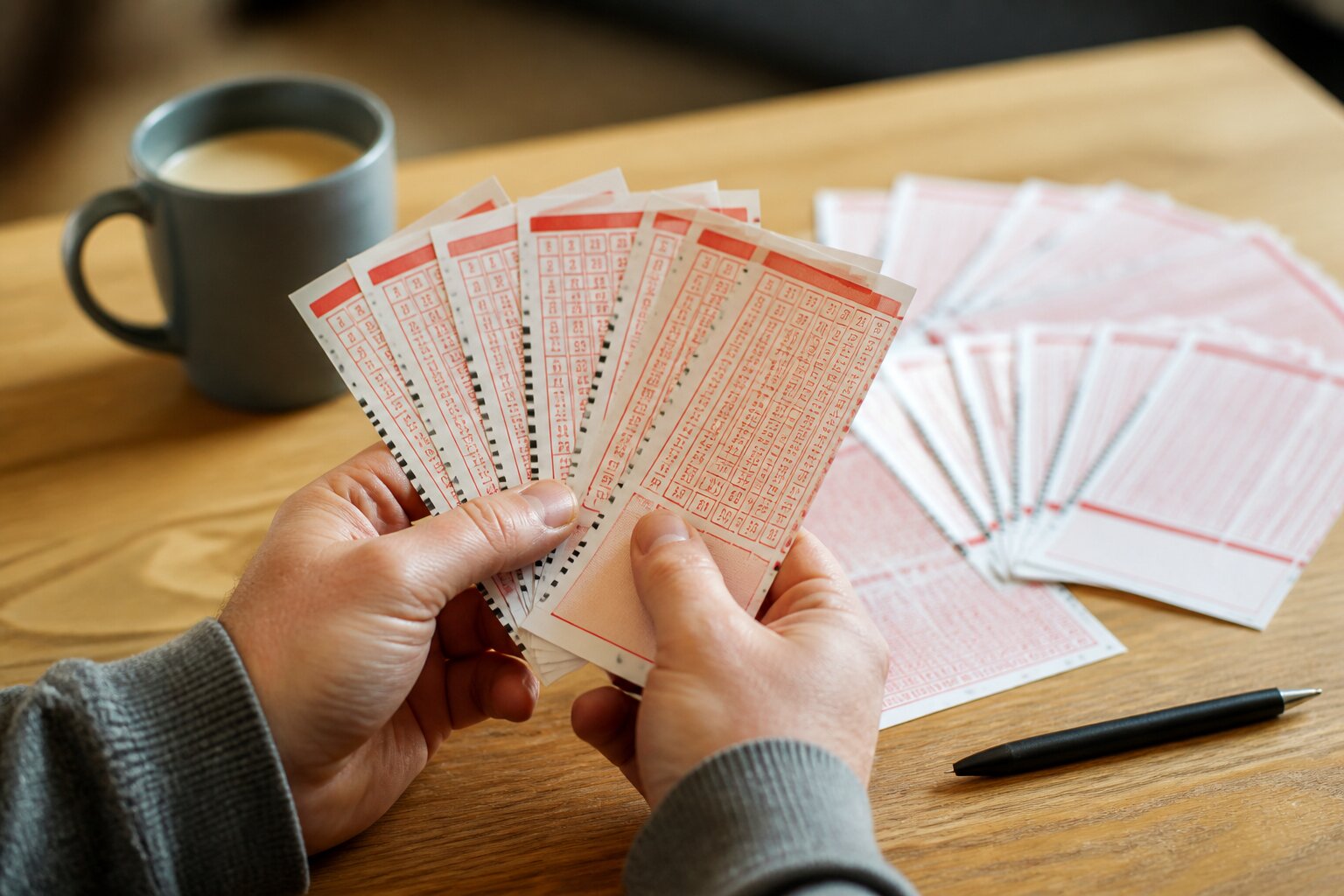
Everyone dreams of scooping a lottery jackpot, but what if there was a trick to tip the odds in your favour?
Lately there’s been a buzz about a so-called “27 tickets” strategy, with some claiming it promises a sure-fire win. It sounds tempting—who wouldn’t want a formula that seems to beat the system?
If you’ve ever wondered whether a guaranteed win is realistic, keep reading. We’ll examine how the idea works, what the mathematics actually say, and the key risks to bear in mind before spending any money.
Is It Possible to Guarantee a Win with 27 Lottery Tickets?
Buying 27 lottery tickets does increase the number of entries a player holds, but it cannot make a win certain. Each ticket is a single combination, and every draw is governed by true randomness; no selection method or number of entries changes the underlying process that determines the result.
Most national lotteries feature millions of possible combinations. Covering 27 of those possibilities still leaves virtually the entire field unselected, so it is quite possible for none of your lines to match the drawn numbers. Claims that a specific small number of tickets will guarantee a prize are therefore misleading.
Rather than promising certainty, the principal effect of buying more tickets is a proportional rise in the number of independent chances you hold. The practical consequence is small unless you can afford to buy a very large share of all possible combinations, which in turn brings serious logistical and financial problems. Next, we’ll look at how lottery odds are actually calculated so you can see the scale involved.
How Do Lottery Odds Work?
Lottery odds are determined by combinatorics: the number of possible ways to select the required quantity of numbers from the available pool. For example, when a game asks for six numbers from a pool of 59, the total number of unique six-number combinations runs into the millions. That figure is the baseline against which any single ticket’s chance is measured.
Each ticket represents one of those combinations, so the chance of a ticket matching all drawn numbers equals one divided by the total number of combinations. Buying additional tickets multiplies the number of combinations you hold, but does not change the size of the overall pool. The odds for any given combination remain constant from draw to draw.
Understanding these figures helps explain why even dozens of tickets make only a marginal difference to the probability of winning a major prize. With that in mind, it’s useful to see what probability theory says about multiple-ticket purchases and how independent entries interact.
The Role of Probability in Multiple Ticket Purchases
Probability treats every ticket as an independent event. If the chance of a single ticket winning the jackpot is one in several million, purchasing 27 tickets provides 27 independent attempts, but the improvement in overall probability is still small relative to the size of the combination pool.
There are two ways to consider the effect: the absolute probability (your chance of at least one winning ticket) and the expected return (the statistical value of what you might win versus what you spend). While the absolute probability increases linearly with the number of tickets, the expected return typically remains negative because the total prize pool and prize-splitting rules are set so that organisers retain a margin.
This point explains why buying many tickets can look like a sensible idea in isolation but rarely works out as a profitable strategy. The next section shows what actually happens when 27 tickets are purchased in practice, including selection methods and practical implications.
What Happens When You Buy 27 Tickets?
Buying 27 tickets means you hold 27 distinct entries; each is treated the same by the draw mechanism. Whether numbers are chosen by the player or assigned at random by the terminal, all entries are equally eligible for any prize the draw awards.
In practical terms, purchasing multiple tickets increases the chance of winning some prize somewhere on the pay table, but it also raises the total cost. For example, if each ticket costs £2, 27 tickets amount to £54 per draw, which can mount up quickly if done repeatedly. There’s also the possibility of sharing a prize: if another player holds the same winning combination, any jackpot would be split.
Some players vary approaches to selection: manual patterns, meaningful dates, or fully random picks. None of these methods alter the mathematical probability of matching the drawn numbers, though they can change the likelihood of sharing a prize; commonly chosen patterns or dates tend to be used by many players, so identical lines are more likely to be shared. With this practical picture in view, it’s worth considering whether any official or legal methods exist that could genuinely guarantee a win.
Are There Official Methods for Guaranteeing a Lottery Win?
No official, legal method guarantees a lottery win. Lotteries are regulated to ensure fairness and randomness, so no authorised strategy can override the fundamentals of how draws operate. The only theoretical way to guarantee a jackpot would be to buy every possible combination, an approach that is usually impractical and often blocked by ticket limits, costs and logistical barriers.
Attempts to construct quasi-guarantees—such as buying huge numbers of tickets or organising large-scale syndicates intended to cover many combinations—run into practical limits. Costs balloon, the chance of prize-sharing increases, and administrative complexities grow, so the promised benefit rarely materialises. Having covered the absence of official guarantees, the next section tackles common myths that persist about improving chances.
Common Myths About Increasing Your Lottery Chances
A range of misconceptions circulates about how to beat the odds, and separating fact from fiction helps avoid wasted expenditure and false expectations.
One persistent myth is that bulk buying guarantees success. As explained earlier, increasing the number of tickets increases the number of entries but cannot change the mathematical structure that determines winners. Another myth concerns supposedly “due” numbers or hot and cold sequences; because each draw is independent, past frequency does not make a number more or less likely in a future draw.
Syndicates do offer a practical advantage in spreading cost and allowing a group to buy more entries collectively, but they also divide winnings among participants. That trade-off can make syndicate play an appealing social option, but it does not change the underlying probabilities. With these misconceptions cleared up, it helps to examine the financial realities so readers can judge whether multiple-ticket play is sensible for them.
Financial Realities of Buying Multiple Tickets
Repeatedly buying multiple tickets can produce a significant ongoing expense. A single draw at £54 for 27 tickets is manageable for some players as an occasional treat, but if such purchases become habitual the total can strain a household budget. The likelihood is that the majority of those outlays will not be returned as winnings.
Beyond direct cost, there are other financial considerations. Large outlays increase the chance of prize-splitting and reduce net return if a win does occur. Moreover, the expected monetary return on lottery tickets is usually negative: over time, the average amount won per ticket tends to be lower than the cost per ticket because of how prize pools and operator margins are structured.
Recognising these factors supports better decision-making about whether and how often to play. If playing continues, it is sensible to treat it as entertainment spending and to allocate only money that won’t affect essential expenses. Having covered financial issues, the following section outlines sensible considerations before buying any tickets.
What Should You Consider Before Spending on Lottery Tickets?
Before purchasing tickets, consider personal motivations and the impact on household finances. Set a maximum spend that aligns with other commitments and stick to it. Reflect on what you expect to gain, and whether the possibility of losing the full amount would cause stress or difficulty.
Many players find it useful to set limits within account settings where available, or to decide on a fixed entertainment allowance in advance. If ticket purchasing begins to feel compulsive or leads to financial strain, pausing and seeking advice is a prudent choice. These practical checks help keep participation enjoyable rather than a source of difficulty.
If you prefer different forms of play, there are regulated instant-win games and online scratchcards offer immediate outcomes and a variety of gameplay styles. These products are governed by the same regulatory framework that oversees draw-based games and are intended to provide entertainment with clear rules and prize structures.
Alternatives to Traditional Lottery Play
For those wanting to try options other than number-draw lotteries, regulated instant-win games and online scratchcards offer immediate outcomes and a variety of gameplay styles. These products are governed by the same regulatory framework that oversees draw-based games and are intended to provide entertainment with clear rules and prize structures.
Instant-win formats can change the pace of play and may suit someone seeking quicker feedback, but the same financial principles apply: budget, limits and an awareness that expected returns are generally less than money spent. Choosing reputable providers and confirming a game’s rules and prize structure before playing helps set accurate expectations and keeps the experience straightforward and transparent. With these alternatives in mind, we can draw a final appraisal of the 27-ticket idea.
Conclusion: Is a Guaranteed Lottery Win Possible with 27 Tickets?
A guaranteed lottery win with 27 tickets is not possible. The mathematics of lotteries, the size of the combination pools, and the regulated randomness of draws mean that no modest collection of tickets can ensure a jackpot. Purchasing more tickets raises the number of independent chances held, but the increase is small unless a very large portion of all possible combinations is bought—a route that brings prohibitive cost and practical obstacles.
The clear takeaway is that lottery play should be approached as entertainment, with spending limits and an understanding of the low probability of winning significant prizes. If you choose to take part, set a budget, treat it as a discretionary expense, and consider alternatives if you want different pacing or prize formats. Play sensibly and make choices that fit your finances and priorities.
**The information provided in this blog is intended for educational purposes and should not be construed as betting advice or a guarantee of success. Always gamble responsibly.